It’s almost Valentine’s day, and in honor of the one day of the year commercially dedicated to L’Amour, we thought would be fun to talk about some of the Infectious Diseases associated with “kissing”.
- Let’s start with “The Kissing Disease” – Infectious Mononucleosis:
Infectious Mononucleosis or “Mono” is an illness most commonly caused by a herpesvirus called Epstein Barr Virus (EBV). Mono is characterized by a constellation of non-specific symptoms including sore throat, fatigue, muscle pains, fever, headache and lymphadenopathy (swollen lymph nodes). It is transmitted through exchange of body fluids like saliva, semen, blood, etc.
Mono is diagnosed clinically, and sometimes with additional serologic testing which can identify EBV as the specific cause of Mono. A recent case of Mono is likely if a person has antibodies to the viral capsid antigen (VCA) in the absence of EBV nuclear antigen (EBNA) antibodies. The monospot (heterophile antibody) test relies on a patient’s serum ability to agglutinate sheep blood red blood cells, but is not very sensitive and may miss cases of Mono.
There is no recommended treatment for Mono other than symptomatic therapy. Patients diagnosed with Mono are usually advised to avoid body fluid contact with others, avoid sharing personal items such as toothbrushes. Additionally, because of enlargement of the spleen, patients diagnosed with Mono are typically advised to avoid contact sports for 6-8 weeks after diagnosis, as they would be at higher risk for splenic rupture as a result of rough contact.
- Did you know that Kissing Ulcers can be caused by several sexually transmitted diseases?
Kissing ulcers refer to symmetrical ulcerated lesions occurring in folds of skin. It is thought that they are formed as a result of the ulcer on one side of the skin fold auto-infecting the other side after prolonged contact. This can be seen on the lips, labia or penis. This is not specific to one particular infection, and can occur with infections due to syphilis (caused by Treponema pallidum), genital herpes (caused by herpes simplex virus), chancroid (caused by Haemophilus ducreyi), lymphogranuloma venereum (caused by Chlamydia trachomatis L1-3 serotypes).
- This bug’s bite may be mistaken for a kiss, but the effects are not so sweet: Kissing bugs transmit trypanosomes causing Chagas Disease
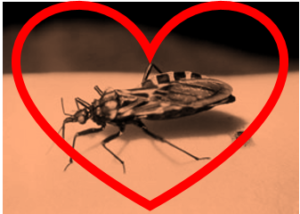
Chagas Disease is caused by Trypanosoma cruzi, a protozoan parasite transmitted to humans by triatomine bugs, also known as reduvid bugs, vampire bugs or kissing bugs. The bugs are called kissing bugs because they typically bite near the mouth or eyes. The bites are painless and although the bugs take blood meals during bites, T. cruzi is actually transmitted when the insect defecates near the site of the bite.
Chagas Disease is endemic in South America, and is generally asymptomatic. If symptoms do occur in the acute stage of infection, they can consist of fever, lymphadenopathy, myocarditis (inflammation of heart muscles), and liver/spleen enlargement. Years after infection, the chronic stage of Chagas disease can include enlargement of the esophagus and colon, weight loss, and the most serious complication of infection is cardiomyopathy.
In the acute stage of Chagas Disease, blood smears can identify various forms of the parasite. In the chronic stage (or in cases of solid organ transplant or transfusion-related infections), serologic testing (antibodies) or molecular testing (PCR) is necessary to make the diagnosis. Treatment for Chagas Disease generally involves a consultation with the Centers for Disease Control and Prevention, as the antiparasitics (nifurtimox and benznidazole) are not readily available.
Of course, this list is not exhaustive. I’m sure there are other Infectious Disease syndromes that are associated with the word “kiss”. If you know others that were not mentioned, feel free to add a comment!
Happy Valentine’s Day!
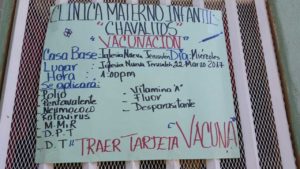 os Chavalitos Clinic is the outreach of APUSAN, a Spanish acronym meaning “Association of Pediatricians United for the Health of the Children.” APUSAN was founded by a small group of ambitious young Nicaraguan medical residents in the early 1990s. The doctors, who saw a multitude of children in advanced stages of diarrhea in the emergency departments of the hospital where they worked, knew that diarrhea can be prevented and should not be a major cause of childhood death, as it was in Nicaragua (and in many underdeveloped countries). They knew that education of the parents was the key to prevention and they formed APUSAN, a legal corporation in Nicarag
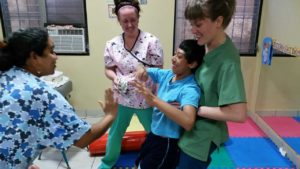 UNMC began sending individual student volunteers to work at Los Chavalitos in 1995 and the first SAGH-sponsored medical service trip took place in Nicaragua in 1996, with 13 participants. UNMC has offered the service trips to Nicaragua annually since 2000. The SAGH medical service trips, which also take place in Jamaica and a Native American Reservation, have grown in student participation since the first trip. Twenty-two years there will be 41 UNMC students in Nicaragua participating in one-week SAGH medical service trips. Of these 41 students, nine of them will be based in Managua, volunteering under the auspices of the Los Chavalitos medical director. Every day the group will go into the neighborhoods served by Los Chavalitos and establish “puestos” (posts) in one of these communities – perhaps the home of a community leader, a school, or a church, and provide immunization services to the community members, and will also offer vitamin A, anti-parasite pills, and fluoride treatments. The presence of the UNMC group is well-publicized in advance, so that the community members can plan to take advantage of the free services offered, which have been approved by the Nicaraguan Ministry of Health (and it is the government who provides the vaccines that the group uses). Four of the
 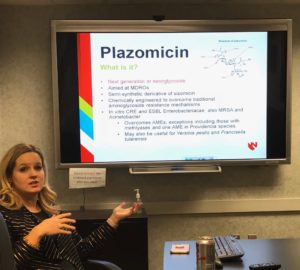 Dr. Cawcutt shared brief data about


Recent Comments