Research Digest is a periodic installment that recognizes the world-class clinical research performed right here at UNMC ID. This post is also the last in a series of posts recognizing STI awareness week/month with quick summaries of recent articles on monkeypox and HIV published by UNMC ID faculty. As always, check out the full articles linked in each digest.
Dr. Kalil, co-author of a recent publication exploring the best practices in the face of future epidemics/pandemics.
The first article, co-authored by Dr. Andre Kalil explores the lessons we have learned throughout the COVID-19 pandemic and applies them in a call for action in the ongoing Mpox (monkeypox) epidemic.
Published early this year in The Lancet- Infectious Diseases, Dr. Kalil draws on the medical community’s experience gained through the past decade of outbreaks as well as draws parallels between what techniques that would characterize an optimal COVID-19 response could offer current efforts to combat this new pathogen. With no proven therapies for Mpox, the authors call for funding and development of ethical and safe randomized controlled trials for pathogens of epidemic or pandemic concern, boosting our preparedness for future outbreaks. Read the full article here.
Dr. Swindells, co-author of two recent articles exploring treatment options for people with HIV.
The second article explores the promise of long-acting antiretroviral therapies in the treatment of HIV. Co-authored by Dr. Susan Swindells, the paper provides a 152-week update for the ATLAS-2M trial which is investigating long-acting IM Cabotegravir and Rilpivirine treatment for maintenance of HIV-1 virologic suppression. Designed as a non-inferiority trial, the study concludes that this regimen and dosing schedule is effective for up to 3 years (the current length of the study). Click here for the full article.
In the third paper, also co-authored by Dr. Swindells, the authors explore whether recent clinical findings supporting the non-inferiority of rifapentine-moxifloxacin over standard rifampin-ethambutol for treatment of tuberculosis (TB) hold true in the subpopulation of people with HIV. Eligible participants with CD4+ counts > 100 cells/uL who were receiving efavirenz antiretroviral therapy were enrolled and split between the two TB treatment options. The study concludes that this alternative regimen is indeed effective in this specific patient subpopulation, with a modestly reduced rate of reported adverse events. See the article in full here.
The Nebraska Antimicrobial Stewardship Assessment and Promotion Program (ASAP) will be hosting its annual Nebraska Antimicrobial Stewardship Summit in person on Friday, June 2, 2023, at the Embassy Suites LaVista Hotel and Conference Center. There will be a combined morning session followed by afternoon breakout sessions with targeted presentations in long-term care and acute care/outpatient settings tracks. Registration for the Summit is $99 per attendee, which includes parking, food, and CE credits for physicians, nurses, pharmacists, and medical laboratory scientists. Read on below for more information and to register!
TARGET AUDIENCE This accredited continuing education activity is designed for:
– Post-acute and long-term facilities: Long-term care providers, medical directors, infection preventionists, nurses, consultant pharmacists, directors of nursing, quality program leaders, and other health care providers interested in improving the management of common infections through the incorporation of antimicrobial stewardship principles.
– Outpatient facilities and acute care hospitals: Family medicine providers, internal medicine providers, ambulatory care providers, pharmacists, nurses, medical directors, quality program leaders, and other health care providers interested in improving the management of common infections through the incorporation of antimicrobial stewardship principles.
SUMMIT LOCATION Embassy Suites by Hilton Omaha La Vista Hotel & Conference Center 12520 Westport Parkway, La Vista, NE 68128
‘Bench to Bedside’ is a new recurring segment exploring the basic science research conducted in infectious diseases right here at UNMC. This week, in recognition of STI Awareness Month, we feature the Rucks laboratory which studies chlamydial biology through the lens of infection. Special thanks to Natalie Sturd (left) and Dr. Rucks (right) for providing this content and sharing their work.
What are some outstanding questions in the field of chlamydial biology and pathogenesis?
Until about a decade ago, C. trachomatis was a genetically intractable organism, meaning methods used by other researchers for studying bacteria were not available in our field. In basic science research, genetic manipulation is one of the major approaches we take when we want to study a pathogen. However, in the last 10 years, significant advances have been developed that allow transformation7-10. Though we are still playing “catch up” with research on organisms that have been genetically manipulated for several decades, advances in the chlamydial genetic toolbox have led to an explosion in our ability to interrogate the function of chlamydial proteins and effectors. Further, we can turn our attention to some questions in the field that have since remained unresolved. For example, it is not fully understood how C. trachomatis regulates alternating between its EB and RB forms.Also,with regards to the Inc proteins that were mentioned in this week’s Microbe Monday post, many of their individual functions haven’t been elucidated. Apart from their individual functions, Inc proteins have the potential to interact with each other, and their cooperative functions (and how this might expand their individual functions) aren’t currently appreciated. From the host perspective, how C. trachomatis can avoid detection and clearance by the host immune system during asymptomatic, chronic infections is also an active research topic.
What is our research focus in the Rucks lab? Any exciting new directions?
Broadly speaking, the focus of our lab is understanding the host-pathogen interactions of C. trachomatis, how these interactions are regulated, and identifying their impact on host signaling and/or trafficking pathways. As such, we must both examine 1) the microbiology of C. trachomatis and 2) what’s happening with the cell biology of the host cell. In the Rucks lab, there are several areas of active research, including 1) studying how Chlamydia manipulates host vesicle trafficking, 2) understanding proteomic turnover of Inc proteins, and 3) dissecting how Inc-host protein interactions change the interactomes and signaling pathways in host cells. Regarding that last point, a prior study in our lab used a proximity labeling system using APEX2 to identify host proteins found in the vicinity of the inclusion membrane11. This allowed us to cast a wide net to identify proteins recruited to the inclusion. Some of our exciting directions are following up on specific host proteins to investigate how Chlamydia might be recruiting them and altering host pathways.
One of these studies that we are particularly excited about involves follow-up studies designed to better understand the function of two host proteins, LRRF1 and Flightless 1 (FLII/FLI1), that were identified in the proximity labeling study. Both proteins have been shown to be involved in regulating the host’s immune response. LRRF1 has been shown to be involved in innate immune signaling and FLII is a prominent regulator of actin dynamics, fibrosis, and wound healing. Knowing how these biological functions might relate to the reproductive tract pathology of chlamydial infections, we are particularly enthusiastic about investigating the outcome of the localization of these proteins to the inclusion membrane. Additionally, there are increasingly sophisticated co-culture tissue culture models of chlamydial infection, which are designed to better replicate the microenvironment of chlamydial infection. We’re currently using a co-culture system in our lab, combining epithelial cells, fibroblasts, and different innate immune cells.
In a separate line of research, we’re particularly curious about the cooperative functions of Inc proteins and how these might be temporally controlled throughout the chlamydial developmental cycle. Currently, in the field, it is typical to examine a single Inc at a single timepoint post-infection. This approach is reflective of the difficulty in studying an obligate intracellular pathogen. Improved genetic tools are helping us ask questions that we feel are more relevant to Chlamydia pathogenesis, as a successful infection is not likely beholden to a single Inc at a single timepoint post-infection. To test this question, we’ve been developing a whole cadre of new chlamydial strains that allow for the simultaneous knockdown of multiple Incs and the complementation of all or single Inc proteins.
So, while we may not be the ones treating chlamydial infections in the clinic, we are no less dedicated to improving reproductive health outcomes—we are simply coming at it from a different (very molecular) perspective!
Microbe Monday is a monthly installment featuring a microbe of clinical or scientific importance. This month, in recognition of STI Awareness month, we discuss Chlamydia trachomatis. The following content was provided by Natalie Sturd and Dr. Elizabeth Rucks– experts in Chlamydial biology at UNMC.
Chlamydia trachomatiscauses the most common bacterial sexually transmitted disease in both developed and developing nations, and rates of C. trachomatis infections have been steadily rising since the CDC began data collection in 19841. In developing countries, it is also the causative agent of blinding trachoma, which is the leading cause of preventable blindness. In the United States, we spend almost $700 million in direct medical costs towards treating chlamydial infections, which is second only to what we spend treating HIV and HPV. While there are readily available and effective antibiotic treatments for chlamydial infections, the challenges we face in health care involve the asymptomatic nature of most infections, as well as the pathologic consequences of repeat and/or chronic infections.
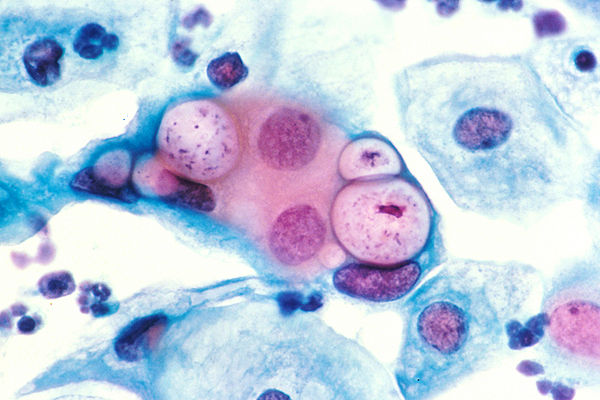
Pap smear showing C. trachomatis (H&E stain).
Indeed, for genital infections, 70-80% of infections in women and 40-50% in men are asymptomatic2, which means these infections regularly go unnoticed and untreated. Both untreated and repeat infections increase the risk of developing more serious chronic sequelae1. In the female reproductive tract, this can present as pelvic inflammatory disease (PID) and fibrosis of the reproductive tract, leading to ectopic pregnancy and tubal infertility. Current treatment regimens for chlamydial infections include the use of broad-spectrum antibiotics like doxycycline and/or azithromycin3, which can lead to the development of bacterial vaginosis (BV)4,5. BV is marked by an imbalance of vaginal microbiota with an increase of Lactobacillus and/or Garderella species and is treated with metronidazole, which indiscriminately eliminates both undesirable and desirable members of the vaginal microbiome3. Thus, despite awareness and available treatment, chlamydial infections remain a significant source of patient morbidity and constitute a serious financial burden on our healthcare system.
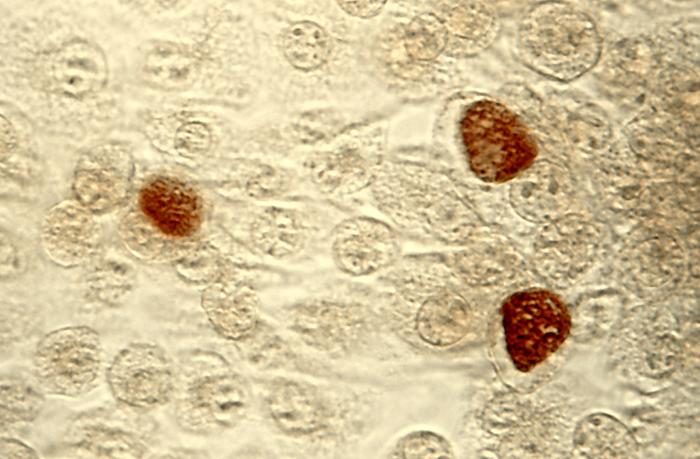
Chlamydia trachomatis inclusion bodies (brown) in a McCoy cell culture.
During the 6 million years that C. trachomatis has evolved with its human host6, its genome underwent reductive evolution, meaning it lost many of the genes found in other prokaryotes and retained a much smaller genome (~1.04Mbp; ~895 open reading frames). As a result of genome reduction, C. trachomatis is an obligate intracellular pathogen, meaning it requires the host cell to complete its developmental cycle. Chlamydia has a distinct biphasic developmental cycle, alternating between two morphological forms: the infectious, non-replicative elementary body (EB) and the non-infectious, replicative reticulate body (RB). The developmental cycle begins with EB entry into the host cell, where it establishes an intracellular niche within a pathogen-specific vacuole, termed the inclusion. The EB rapidly differentiates into the RB, which continues to divide within the inclusion. During later stages of the developmental cycle, RBs asynchronously undergo secondary differentiation to create new EBs. Importantly, each stage of chlamydial development is marked by distinct patterns of gene transcription, as each stage has different nutritional, proteomic, and molecular requirements to continue to grow and avoid detection by the host. From within the inclusion, C. trachomatis must mediate specific host interactions and these interactions are critical for chlamydial pathogenesis. A family of chlamydial effector proteins known as inclusion membrane proteins (Incs) are the primary mediators of these kinds of interactions and are a primary focus in our lab. Inc-host protein interactions have been implicated in the modulation of cellular survival pathways, vesicular trafficking of exocytic vesicles, and inhibition of the host innate immune response, all of which are hypothesized to contribute to a successful infection and a limited host response.
Watch for our next post this week where we will feature the Rucks lab and dive into the research exploring this important pathogen conducted at UNMC.
Natalie Sturd (left) and Dr. Rucks (Right), C. trachomatis researchers at UNMC.
We in the Rucks lab hope to contribute towards improving prevention and infection outcomes from a basic science approach. Specifically, our work helps 1) understand how C. trachomatis establishes an infection in human tissues and 2) identify the outcome of infection in the host cells/tissues in regard to cell biology.
References
1. Centers for Disease Control and Prevention. Sexually Transmitted Disease Surveillance 2020. Atlanta: U.S. Department of Health and Human Services; 2022.
2. Shetty S, Kouskouti C, Schoen U, et al. Diagnosis of Chlamydia trachomatis genital infections in the era of genomic medicine. Brazilian Journal of Microbiology. 2021;52(3):1327-1339.
3. Workowski KA, Bachmann LH, Chan PA, et al. Sexually Transmitted Infections Treatment Guidelines, 2021. MMWR Recomm Rep. 2021;70(4):1-187.
4. Tamarelle J, Ma B, Gajer P, et al. Nonoptimal Vaginal Microbiota After Azithromycin Treatment for Chlamydia trachomatis Infection. J Infect Dis. 2020;221(4):627-635.
5. Unemo M, Bradshaw CS, Hocking JS, et al. Sexually transmitted infections: challenges ahead. Lancet Infect Dis. 2017;17(8):e235-e279.
6. Nunes A, Gomes JP. Evolution, phylogeny, and molecular epidemiology of Chlamydia. Infect Genet Evol. 2014;23:49-64.
Today marks the first day of SHEA 2023 and UNMC ID is presenting throughout the conference. See below for a guide to where to find us.
Tuesday, April 11th, 2023
At 4:15 pm, Jasmine Marcelin, MD is giving a presentation entitled, ‘Disrupting Health Inequities in Emerging Infections”. SHEA Spring 2023 Opening Plenary-(Addressing Inequities in Healthcare Epidemiology: Where We Are and Where We’re Headed)‘. Location: Columbia BCD
Wednesday, April 12th, 2023
From 12:00 – 1:30 pm in the Regency Ballroom, UNMC ID has three posters presented during the ‘Networking Lunch with Posters’ session:
Jonathan Ryder, MD; In-Depth Assessment of Critical Access Hospital Stewardship Program Adherence to CDC’s Core Elements in Iowa and Nebraska. Poster #651.
Jenna Preuske, PharmD; Pharmacist Interventions for Appropriate COVID-19 Antiviral Therapy in Long-Term Care Facilities: A Public Health Initiative. Poster #520.
Erica Stohs, MD, MPH; Pneumonia Panel Results and Antibiotic Prescribing in COVID-19 Patients in 2020 vs 2022 (645). Poster #645
Thursday, April 13th, 2023
At 10am, Jasmine Marcelin, MD is giving a presentation entitled, ‘Building Trust of COVID-19 (and other) vaccines in the BIPOC Community‘. Location: Columbia BCD
From 12:00 – 1:30 pm in the Regency Ballroom, UNMC ID has one poster presented during the ‘Networking Lunch with Posters’ session:
Mackenzie Keintz, MD; Evaluation of Indication in a Urinalysis Driven Reflex Urine Culture Protocol at an Academic Medical Center. Poster #603.
Friday, April 14th, 2023
From 12:00 – 1:30 pm in the Regency Ballroom, UNMC ID has one poster presented during the ‘Networking Lunch with Posters’ session:
Scott Bergman, PharmD; Perioperative Cefazolin Prescribing Rates Following Suppression of Alerts for non-IgE Mediated Penicillin Allergies. Poster #581.
April is Sexually Transmitted Infection (STI) awareness month. This second week of April in particular is set aside to educate and raise awareness about sexually transmitted infections, or STIs, and how they impact our lives. It is also a time to work towards reducing STI-related stigma, fear, and discrimination and a time to ensure people have the tools and knowledge for prevention, testing, and treatment.
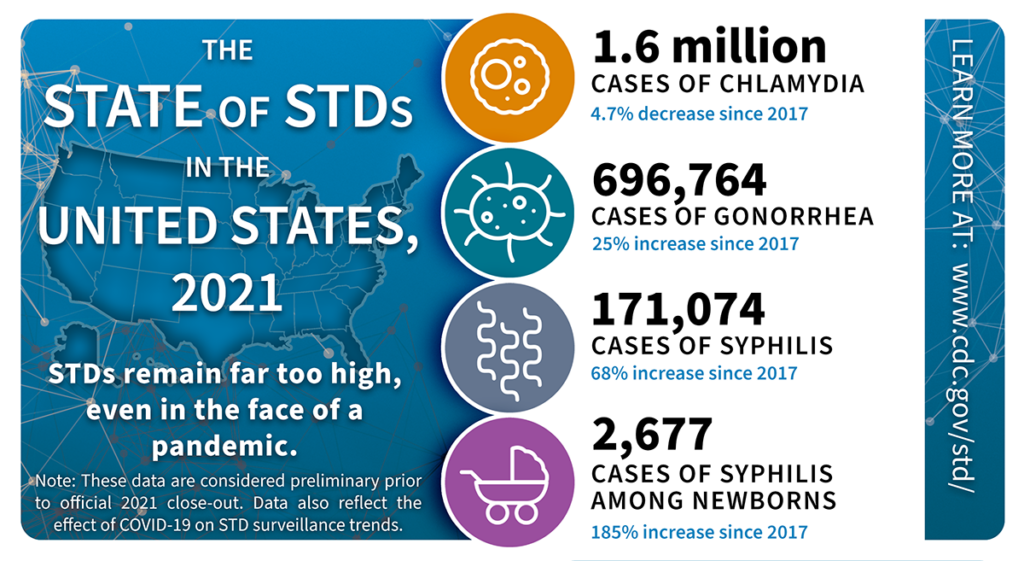
The CDC estimates that about 20 percent of the U.S. population – one in five people – in the U.S. had an STI on any given day in 2018. Left undiagnosed or untreated, many STIs can lead to serious health problems and permanent damage, both in the short and long term. ID and primary care providers are on the frontlines of this crisis, and we would like to take this opportunity to recognize their work in identifying, diagnosing, and treating STIs- as early diagnosis and treatment is key to preventing associated complications.
UNMC ID is away this week at SHEA 2023, but watch our posts for the rest of April for a series on STI awareness month, including the microbes, research, and medicine involving STIs at UNMC.
Next week, UNMC ID will be traveling to Seattle to take part in The Society of Healthcare Epidemiology of America’s (SHEA) annual conference. See below for a guide to where to find us next week in Washington.
Tuesday, April 11th, 2023
At 4:15 pm, Jasmine Marcelin, MD is giving a presentation entitled, ‘Disrupting Health Inequities in Emerging Infections”. SHEA Spring 2023 Opening Plenary-(Addressing Inequities in Healthcare Epidemiology: Where We Are and Where We’re Headed)‘. Location: Columbia BCD
Wednesday, April 12th, 2023
From 12:00 – 1:30 pm in the Regency Ballroom, UNMC ID has three posters presented during the ‘Networking Lunch with Posters’ session:
Jonathan Ryder, MD; In-Depth Assessment of Critical Access Hospital Stewardship Program Adherence to CDC’s Core Elements in Iowa and Nebraska. Poster #651.
Jenna Preuske, PharmD; Pharmacist Interventions for Appropriate COVID-19 Antiviral Therapy in Long-Term Care Facilities: A Public Health Initiative. Poster #520.
Erica Stohs, MD, MPH; Pneumonia Panel Results and Antibiotic Prescribing in COVID-19 Patients in 2020 vs 2022 (645). Poster #645
Thursday, April 13th, 2023
At 10am, Jasmine Marcelin, MD is giving a presentation entitled, ‘Building Trust of COVID-19 (and other) vaccines in the BIPOC Community‘. Location: Columbia BCD
From 12:00 – 1:30 pm in the Regency Ballroom, UNMC ID has one poster presented during the ‘Networking Lunch with Posters’ session:
Mackenzie Keintz, MD; Evaluation of Indication in a Urinalysis Driven Reflex Urine Culture Protocol at an Academic Medical Center. Poster #603.
Friday, April 14th, 2023
From 12:00 – 1:30 pm in the Regency Ballroom, UNMC ID has one poster presented during the ‘Networking Lunch with Posters’ session:
Scott Bergman, PharmD; Perioperative Cefazolin Prescribing Rates Following Suppression of Alerts for non-IgE Mediated Penicillin Allergies. Poster #581.
Blood cultures are a key diagnostic test for persons with sepsis and bacteremia where organisms are grown in the laboratory from patient blood samples to identify the causative agent of infection. Unfortunately, approximately 2-3% of cultures are contaminated, usually with common commensal skin microorganisms. Contaminated blood cultures can “trick” caregivers and result in a significantly longer length of hospital stay and treatment with unnecessary antibiotics. This can result in increased cost, toxicity, and the emergence of antibiotic resistance.
Can rapid blood culture techniques help?
Maybe. The use of molecular-based rapid blood culture systems can more quickly identify microorganisms as probable contaminants and may result in a decrease in the detrimental effects of blood culture contamination. This could include decreased hospital stay and duration of antibiotic treatment.
So, do clinicians use this new technology to result in improved patient outcomes? A recent article authored by Dr. Mark Rupp among other UNMC investigators investigates this question.
Dr. Rupp, co-author of a recent study examining the best way to detect bacteria in patient blood samples.
In a single-center, retrospective, cohort study, they compared hospital length of stay and antibiotic treatment associated with blood culture contamination before and after the introduction of a rapid blood culture identification system (BCID).
They examined the records of 305 patients with blood culture contamination in the pre-BCID and 464 patients with blood culture contamination in the post-BCID periods.
Unfortunately, there was no change in the length of hospital stay (10.8 days versus 11.2 days) and duration of antibiotic treatment (5.1 days versus 5.3 days) in the pre-BCID and post-BCID periods, respectively. Therefore, the authors conclude that the introduction of a rapid BCID system alone does not impact the length of stay and antibiotic treatment associated with blood culture contamination and the use of such systems should be coupled with robust education, antimicrobial stewardship efforts, and real-time decision support.
We are proud of our ID leaders for many reasons, one of which is their constant desire to improve and educate themselves and others for the betterment of patient care. One example of this is seeking out additional training at the national level and sharing that knowledge with those here at UNMC. Read on for a quick story of a successful training course and what it means for education and quality improvement at Nebraska Medicine.
“Nichole Regan is the Assistant Director for HIV Programs at the UNMC/Nebraska Medicine Specialty Care Center. She has been a great asset to the program in assisting with clinical directorship as well as directing the HIV Clinical Quality Management Program. She is leading the training of SCC staff on quality improvement. Her participation in this program is a great step towards improving understanding of the principles of QI amongst the staff and we hope to be able to spread this knowledge regionally as well.“
– Dr. Nada Fadul
Nichole Regan, APRN, Assistant Director of HIV Programs at UNMC/Nebraska Medicine Specialty Care Center, attended the national Training-of-Trainers (TOT) Program on March 22-24, 2023, in Dallas, TX. The three-day, in-person training was presented by the HRSA Ryan White HIV/AIDS Program Center for Quality Improvement & Innovation (CQII). CQII will celebrate its 20-year anniversary later in the year and close to 2,000 individuals have graduated from its advanced trainings across the country. The TOT is an advanced capacity-building training program for individuals with experience in clinical quality management, who wish to refine their skills in training others on quality improvement principles and practice.
This year’s TOT began in February 2023 with several Zoom meetings as well as preparatory self-paced studies in quality management and adult learning principles. While in Dallas, the cohort of approximately 50 leaders across the U.S. in HIV care and quality management met in person for an intensive session comprised of didactic as well as hands-on, experience-oriented learning activities. The program culminated with a capstone project where participants had the opportunity to train each other regarding components of clinical quality management. In the next 4 months, participants will complete the program requirements by utilizing their training skills and resources to lead three clinical quality management trainings for other Ryan White program stakeholders.
UNMC Giving Day is a virtual day of giving and engagement in support of UNMC students, researchers and clinical partners. To honor the year of UNMC’s founding, this philanthropic event will last for 1,869 minutes (about 31 hours) beginning at 10 a.m. on March 30 and concluding at 5 p.m. on March 31.
Join us in support of those who selflessly commit their lives to helping others; unite with other UNMC alumni, friends, and grateful patients to develop the next generation of healthcare professionals.
How can I help?
Consider a gift to the Diana Florescu Clinical Research and Education Excellence Endowed Fund. This fund was established to honor Dr. Florescu, creating a legacy to recognize her many accomplishments, and continuing the work to which she dedicated her life. Diana demonstrated strongly held beliefs in the power of education and the value of clinical research, those same ideals to which the fund is dedicated.
Diana Florescu, MD.
Please consider demonstrating your support for UNMC, the ID Division, and Dr. Diana Florescu by donating to this fund to sustain education and clinical research efforts of the ID Division for decades to come.
Vincent Van Gogh stated “Great things are done by a series of small things brought together”
Please consider making a donation, in any denomination, to continue the work of our friend and colleague who was taken from us all too soon.
Please contribute online directly to the Nebraska Foundation on this webpage.
Written donations in memory of Diana Florescu, M.D. may be sent to the University of Nebraska Foundation, P.O. Box 82555, Lincoln, NE 68501-2555. Please ensure to include on the memo line or enclosed note that the gift is in memory of Dr. Diana Florescu.
Thank you for your consideration and your generosity.







Recent Comments