By Kelly Cawcutt, MD, MS, FACP, FIDSA, FCCM, FSHEA
Medical Director, Acute Care Quality
Senior Medical Director, Infection Prevention & Hospital Epidemiology
(Adapted from Grand Rounds presentation, December 2025; this post is AI supported creation)
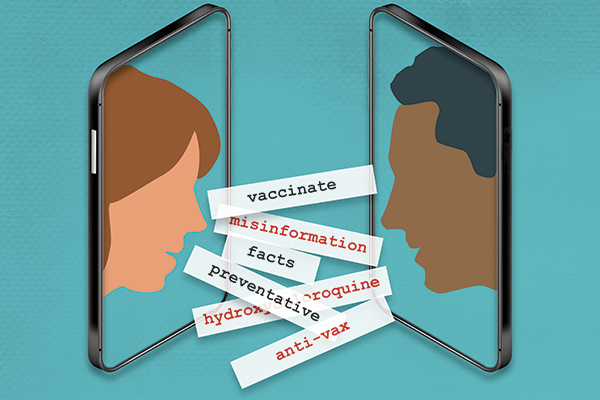
Health misinformation isn’t new — but the scale, speed, and impact we’re seeing today is unlike anything in modern history. In 2025, the American Psychological Association released a consensus statement underscoring health misinformation as one of the most urgent threats to public health. The World Health Organization has called this an “infodemic”: an overabundance of information, both accurate and not, that makes it hard for people to find trustworthy guidance when they need it most.
And, much like an infectious pathogen, misinformation spreads quickly, silently, and with significant downstream harm.
In healthcare, understanding misinformation is no longer optional. It’s part of the clinical landscape we navigate every day.
What Counts as Health Misinformation?
Despite its widespread use, the term misinformation has evolved rapidly. Today, it broadly refers to false, misleading, or inaccurate information shared without the intent to deceive. Like a virus, it can be:
- Hard to detect
- Rapidly transmissible
- Emotionally compelling
- Harmful both to individuals and to public health
Common red flags include sensational claims, emotionally charged or divisive wording, cherry-picked or decontextualized data, and absence of credible sources.
Why Health Misinformation Matters
The consequences go well beyond online confusion:
- Erosion of trust in clinicians, science, and healthcare systems
- Delayed or avoided care, including refusal of preventive services
- Worsening disease severity and outcomes
- Increased strain on public health infrastructure
As clinicians and health leaders, we often encounter patients whose health beliefs or decisions have been shaped by misinformation long before they see us.
How Misinformation Spreads — and Why People Believe It
Decades of psychological research offer important insights:
1. Repetition Works
People tend to believe information they encounter repeatedly — even if it’s false. This “illusory truth effect” is one of the strongest drivers of misinformation uptake.
2. Emotions Drive Engagement
Fear, anger, surprise, or outrage dramatically increase the likelihood of sharing content online.
3. Misinformation Meets Human Needs
People share information because it aligns with identity, reinforces group belonging, or offers a sense of control and meaning.
4. Anyone Can Be Susceptible
Across demographics and education levels, susceptibility is linked less to intelligence and more to:
- Cognitive shortcuts
- Existing belief systems
- Distrust
- Information overload
Empathy, not judgment, is essential here.
Addressing Misinformation Begins With Trust
Before any corrective information can land, a foundational question must be answered:
Does your patient or audience trust you?
Mistrust — of institutions, government, or healthcare — is one of the most potent accelerants of misinformation. Building rapport, validating concern, and maintaining transparency are vital.
Evidence-Based Strategies to Address Misinformation
Research from psychology and communication science points to several effective techniques:
1. Pre-bunking (Inoculation Theory)
Like a vaccine, pre-exposure to weakened forms of misinformation — along with explanations of how it misleads — can build resistance.
2. Priming
Setting expectations ahead of time (e.g., “You may hear claims that X — here’s why they’re misleading…”) increases resilience to false information.
3. Debunking
When misinformation must be corrected:
- Lead with the correct fact first.
- Explain why the misinformation is incorrect.
- Replace it with an alternative explanation.
- Avoid repeating the myth excessively — doing so can inadvertently reinforce it.
4. Practice and Reinforcement
Like any behavioral skill, effective communication requires repetition — for both clinicians and patients. “Boosters” may be needed over time.
5. Beware the Backfire Effect
While rare, corrections can sometimes harden misinformation beliefs. Strategies that emphasize empathy, shared values, and collaborative problem-solving reduce this risk.
A Broader Community Strategy
Healthcare leaders cannot combat misinformation alone. Effective mitigation requires:
- Collaboration with trusted community leaders and organizations
- Media and digital literacy training at all ages
- Policies that support fact-checking, transparency, and responsible platform governance
- Public health investment in local communication networks
- Leveraging trusted messengers to reach audiences traditional healthcare may not
The infodemic is a systems-level challenge — and addressing it is a shared responsibility.
Where Social Media Fits In
The role of social media platforms has prompted growing discussion around whether they function as a commercial determinant of health. Algorithms prioritize engagement, not accuracy, creating an environment where emotionally charged misinformation thrives.
And, importantly: you don’t have to, and frankly should not, argue with online posts. Sometimes, the best move is simply not feeding the trolls.
Key Action Points for Clinicians and Leaders
- Build trust first. No strategy works without it.
- Use evidence-based communication tools such as pre-bunking, debunking, and replacement.
- Engage with empathy, not confrontation.
- Support community-centered partnerships to amplify accurate information.
- Recognize social media’s influence and the need for institutional responses.
- Practice ongoing vigilance. The misinformation landscape evolves quickly.
Select References for Further Review
- Scherer, Laura D., and Gordon Pennycook. “Who is susceptible to online health misinformation?.” American Journal of Public Health 110.S3 (2020): S276-S277.
- Chaufan, Claudia, et al. “Trust us—We are the (COVID-19 misinformation) experts: A critical scoping review of expert meanings of “misinformation” in the COVID era.” COVID 4.9 (2024): 1413-1439.
- Ecker, Ullrich KH, et al. “The psychological drivers of misinformation belief and its resistance to correction.” Nature Reviews Psychology 1.1 (2022): 13-29.
- Denniss, Emily, and Rebecca Lindberg. “Social media and the spread of misinformation: infectious and a threat to public health.” Health promotion international 40.2 (2025): daaf023.
- Lalani, Hussain S., et al. “Addressing viral medical rumors and false or misleading information.” Annals of Internal Medicine 176.8 (2023): 1113-1120.
- Ho, Kevin KW, and Shaoyu Ye. “Factors affecting the formation of false health information and the role of social media literacy in reducing its effects.” Information 15.2 (2024): 116.
- Zhang, Shiyi, Huiyu Zhou, and Yimei Zhu. “Have we found a solution for health misinformation? A ten-year systematic review of health misinformation literature 2013–2022.” International Journal of Medical Informatics 188 (2024): 105478.
- Whitehead, Hannah S., et al. “A systematic review of communication interventions for countering vaccine misinformation.” Vaccine 41.5 (2023): 1018-1034.
- https://www.apa.org/topics/journalism-facts/misinformation-belief-action
- Roozenbeek J, van der Linden S. How to Combat Health Misinformation: A Psychological Approach. American Journal of Health Promotion. 2022;36(3):569-575. doi:10.1177/08901171211070958
- Van der Linden, Sander, et al. “Using psychological science to understand and fight health misinformation: An APA consensus statement.” American Psychologist (2025).
- Feng, Xiaoye, et al. “Health Misinformation Detection: Approaches, Challenges and Opportunities.” INQUIRY: The Journal of Health Care Organization, Provision, and Financing 62 (2025): 00469580251384784.
This was a very informative and timely post. I liked how you explained why misinformation spreads and what can be done about it, it’s practical, clear, and really important.