Antimicrobial resistance is often discussed as a healthcare problem, but resistant organisms do not stay within hospitals and clinics. They move among people, animals, food, water, and the environment. This is why CDC considers AMR a One Health issue, recognizing that the health of people, animals, plants, and the environment are interconnected.
How does resistance move between these spaces?
Animals can carry resistant organisms and spread them to other animals, the environment, or people. Resistant infections can also reach people through contaminated food or direct contact with animals and their environments. Human and animal waste can contain both antimicrobial residues and resistant organisms. Treatment plants reduce contaminants before releasing water back into the environment. Still, these systems were not designed specifically to remove antimicrobial residues, resistant organisms, or resistance genes, some of which can survive treatment.
These connections make AMR more complex, but they also give us more opportunities to intervene.
Preventing infections is part of stewardship
Clinicians and pharmacists can improve antimicrobial use. Veterinarians can protect animal health while supporting responsible antibiotic use. Laboratories and public health agencies can identify and track resistance. Infection prevention teams can reduce transmission.
And all of us can help prevent infections in the first place.
Vaccination, hand hygiene, safe food practices, clean water, and effective infection prevention reduce infections and therefore reduce opportunities for antimicrobial use.
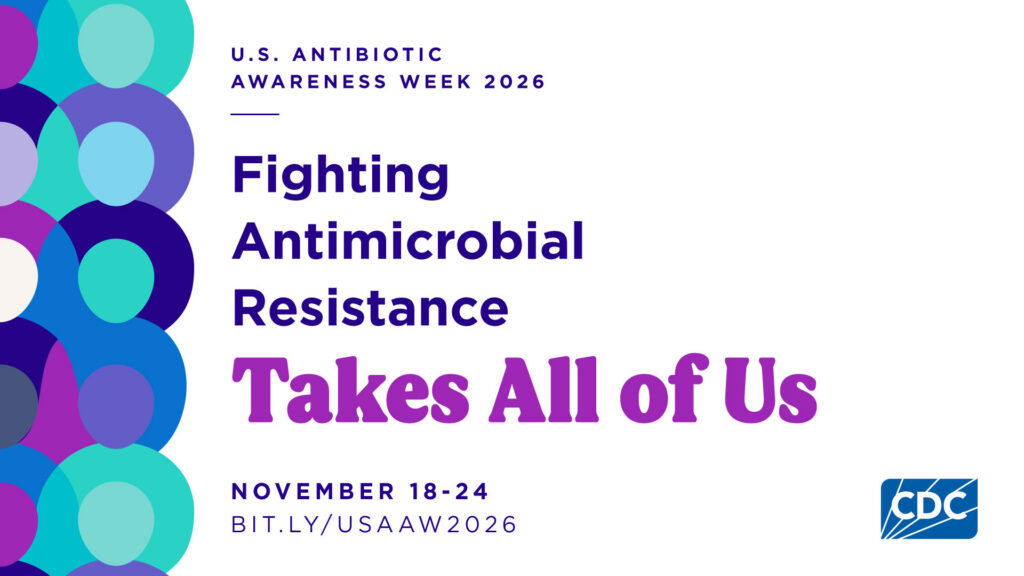
This broader perspective helps explain CDC’s 2026 theme, “Fighting Antimicrobial Resistance Takes All of Us.” No single profession can solve antimicrobial resistance, but each of us has many opportunities to make a difference.