Thanksgiving means food, family, travel, and time together. Unfortunately, it also comes as respiratory virus season gets underway. Flu is starting earlier than usual this year, including here in Omaha, but that does not mean people need to cancel Thanksgiving. We have prevention tools we already know work: get vaccinated, stay home if you are sick, protect higher-risk relatives, improve ventilation when possible, and seek treatment promptly if symptoms develop.
Before Thanksgiving: Get Your Flu Vaccine
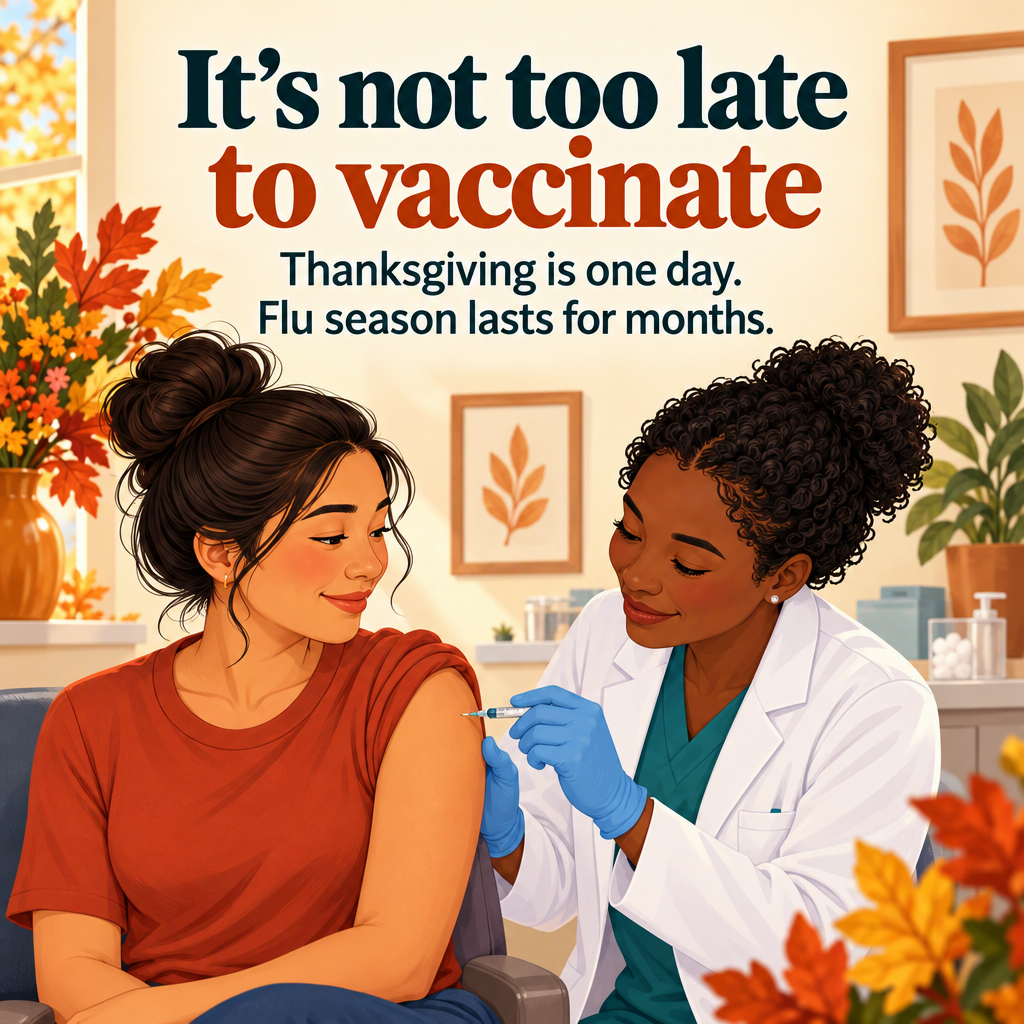
The CDC recommends annual influenza vaccination for everyone 6 months and older. Vaccination reduces the risk of flu and its potentially serious complications. It can also reduce illness severity even when infection still occurs.
It takes about two weeks for the body to develop antibodies after vaccination, so you may not have maximum protection by Thanksgiving. But Thanksgiving is one day. Flu season lasts for months.
Make the Gathering Safer Without Making It Weird
You don’t need to spend Thanksgiving disinfecting everything in sight. Instead, focus on a few practical measures: wash your hands, cover coughs and sneezes, improve ventilation or air filtration when possible. Consider a well-fitting mask in crowded indoor spaces, particularly if you or someone you will be around is at higher risk. These are among the CDC’s recommended strategies for preventing flu.
If You’re Sick, Stay Home
This can be difficult…you already bought the plane ticket. Your family is expecting you; or maybe you’re responsible for the mac and cheese!
But if you develop fever, chills, cough, body aches, significant fatigue, or other respiratory symptoms, staying home may be one of the most important things you can do to protect the people you love.
Current CDC respiratory virus guidance recommends staying home until your symptoms are improving overall and you have been fever-free without fever-reducing medication for at least 24 hours. Additional precautions are recommended for the following five days.

If You Get Sick After Thanksgiving, Don’t Ignore It
Flu can be more than a few miserable days on the couch. If you are pregnant, older, immunocompromised, have certain chronic medical conditions, or otherwise have a higher risk of complications, contact your clinician early. Flu antiviral medications work best when started within the first one to two days of symptoms, although starting later may still benefit people with more severe illness or increased risk.
For Clinicians
For clinicians caring for patients with suspected or confirmed influenza, the Infectious Diseases Society of America (IDSA) offers more detailed guidance on diagnostic testing, antiviral treatment, chemoprophylaxis, and management of influenza outbreaks. The guideline also addresses higher-risk populations, including pregnant and postpartum patients and people who are immunocompromised.
- IDSA Clinical Practice Guideline: Seasonal Influenza
- IDSA 2026 Guidelines on Respiratory Vaccination in Immunocompromised Patients provide current 2026–27 guidance on influenza, COVID-19, and RSV vaccination for immunocompromised adults and children.
For patient-facing information and additional influenza resources, visit the IDSA Influenza Resource Page.