ij ZjWXS

Division of Infectious Diseases

New Leadership transitions in UNMC ID

2025 is a year of leadership transitions for our division. At the beginning of the year, we welcomed our new Division Chief, Dr. Dave Warren, to the division. Recently a few other leadership transitions have occurred starting July 1, and we are excited to share!


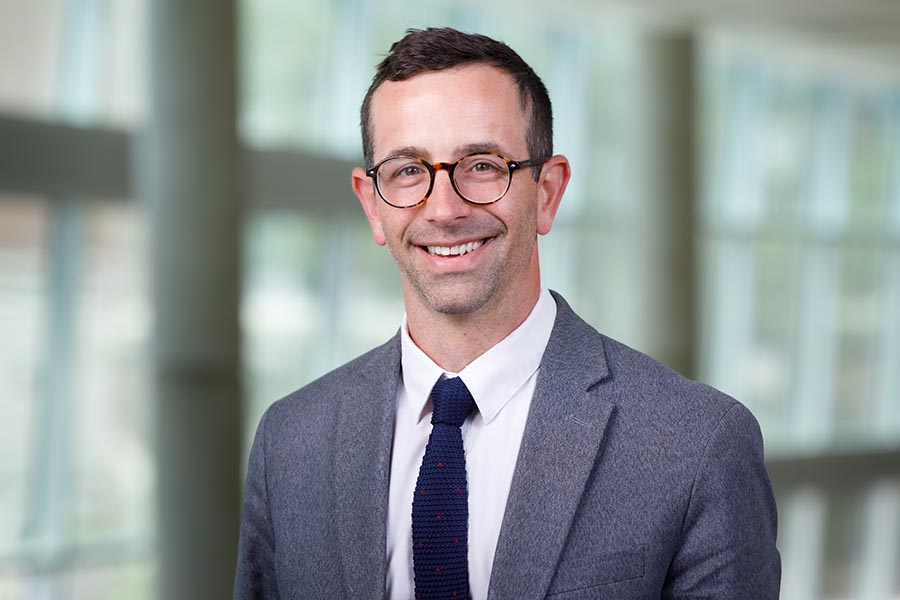
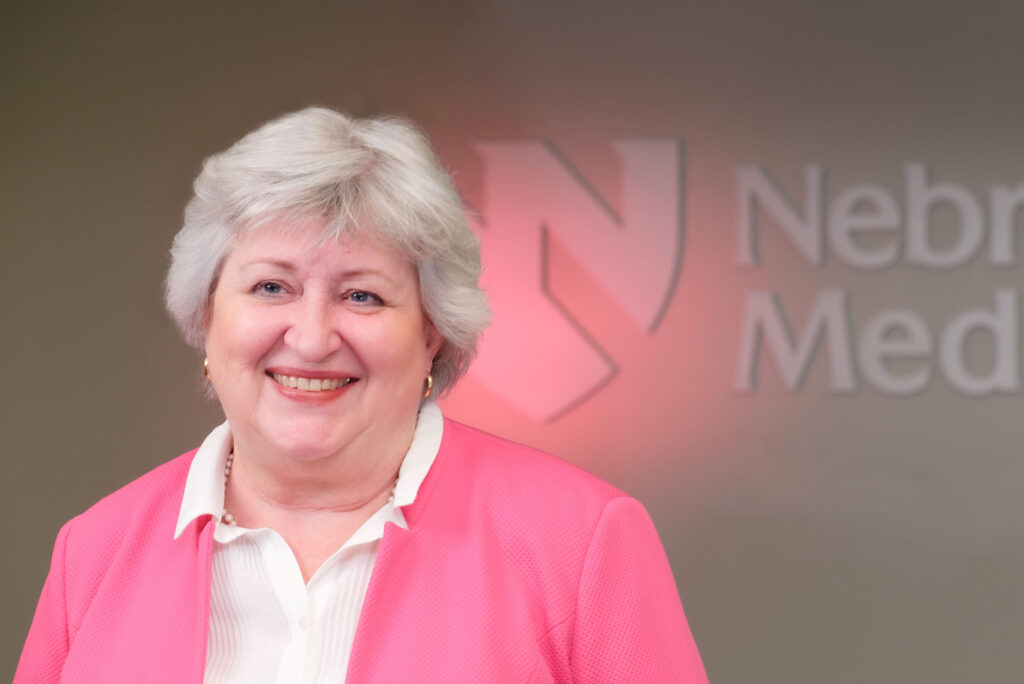
New Specialty Care Clinic Leadership: Dr. Fadul–>Dr. Bares

Dr. Nada Fadul is a Professor of Medicine and Associate Dean for Faculty Affairs at UNMC. A University of Khartoum graduate, she has been the Medical Director of the Specialty Care Clinic since she came to UNMC in 2018. She leads the Ryan White HIV programs and focuses on health disparities and global health. During her time in this role, Dr. Fadul has guided the clinic through rural expansion through telehealth, COVID-19 and mpox crisis management, implementation of long-acting antiretroviral treatment programs, and comprehensive HIV education programs. After serving in the Medical Director role for the past 7 years, she is stepping away from these responsibilities to focus on her new role as Associate Dean for Faculty Affairs. She will continue to direct the Ryan White program and see patients in her clinic. Dr. Fadul is a published researcher, mentor, and advocate, serving on the Board of the HIV Medical Association, and multiple other local, national, and international organizations.  

Dr. Sara Bares is an Associate Professor at UNMC and as of July 1, is the new Medical Director of the Specialty Care Center. A graduate of the Icahn School of Medicine at Mount Sinai, she completed her residency and fellowship training at the University of Chicago.  Since joining University of Nebraska Medical Center in 2013, Dr. Bares has been active in patient care, clinical research, and medical education. She specializes in HIV care, especially for Spanish-speaking populations, and founded a Spanish-language HIV clinic. Dr. Bares is an NIH-funded, nationally and internationally renowned researcher whose scholarship focuses on HIV comorbidities and women’s health. She provides education in both the undergraduate and graduate medical education curricula and has received multiple teaching awards throughout her time at UNMC.
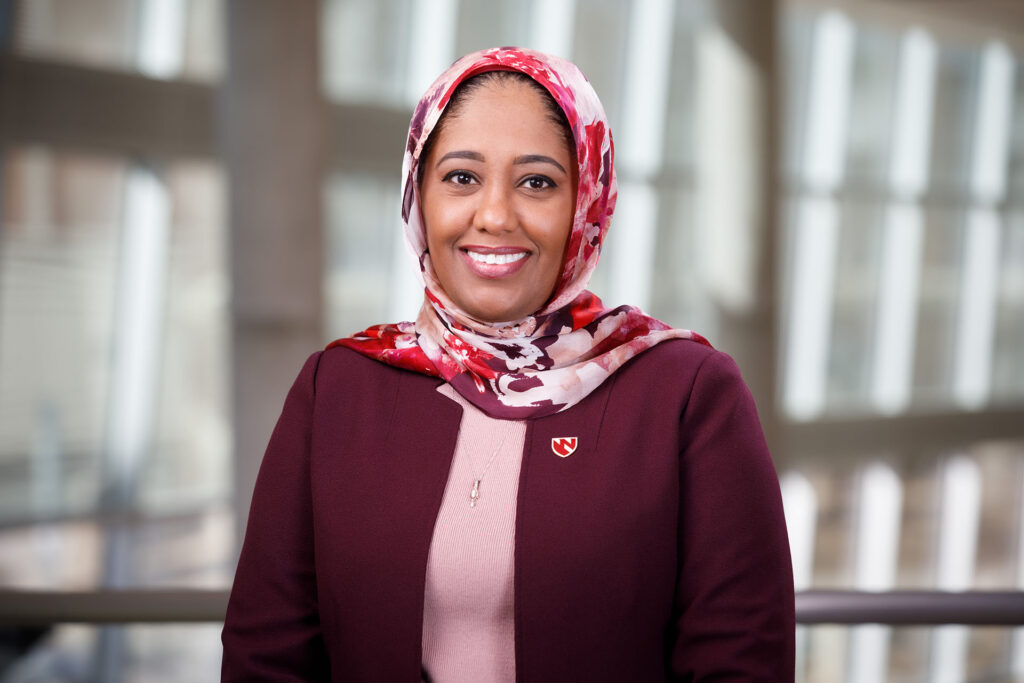

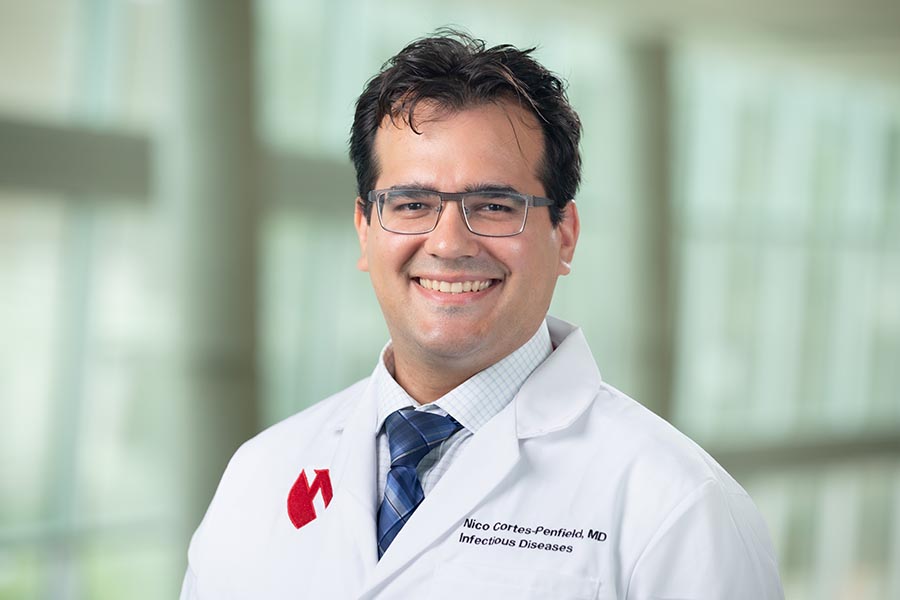
New Orthopedic Infectious Diseases Service Leadership: Dr. Hewlett–>Dr. Cortes-Penfield

Dr. Angela Hewlett is Professor of Infectious Diseases and George W Orr MD and Linda Orr Chair in Health Security at UNMC. Dr. Hewlett has been at UNMC since 2009. Her areas of expertise include biopreparedness/biocontainment and orthopedic infections. She is the Medical Director of the Nebraska Biocontainment Unit, and played a key role in treating patients with Ebola virus disease as well as some of the first COVID-19 patients in the U.S. A UTMB graduate, she is the author of a biopreparedness textbook. She leads education in biocontainment at UNMC and developed a biopreparedness and biocontainment Enhanced Medical Education Track (EMET) program in the medical school. Dr. Hewlett was the founding Medical Director of the Orthopedic Infectious Diseases Service Line, is a past-President of the Musculoskeletal Infection Society (MSIS), and is a national and international expert on orthopedic infections.

Dr. Nicolas Cortes-Penfield is an Associate Professor at UNMC and as of July 1, he is the Medical Director of the Orthopedic Infectious Diseases Service Line. He specializes in orthopedic infectious diseases and outpatient IV antibiotic therapy. He has been the Medical Director of the Nebraska Medicine Outpatient Parental Antimicrobial Therapy Program since 2019, leading the expansion of this program and guideline development. A Baylor College of Medicine graduate, Dr. Cortes-Penfield is a national and international expert known for his work on device-related infections and evidence-based practice. He’s a mentor, educator, and award-winning faculty member, active in the IDSA Medical Education Community.

New Leadership Position: Nebraska Biocontainment Unit
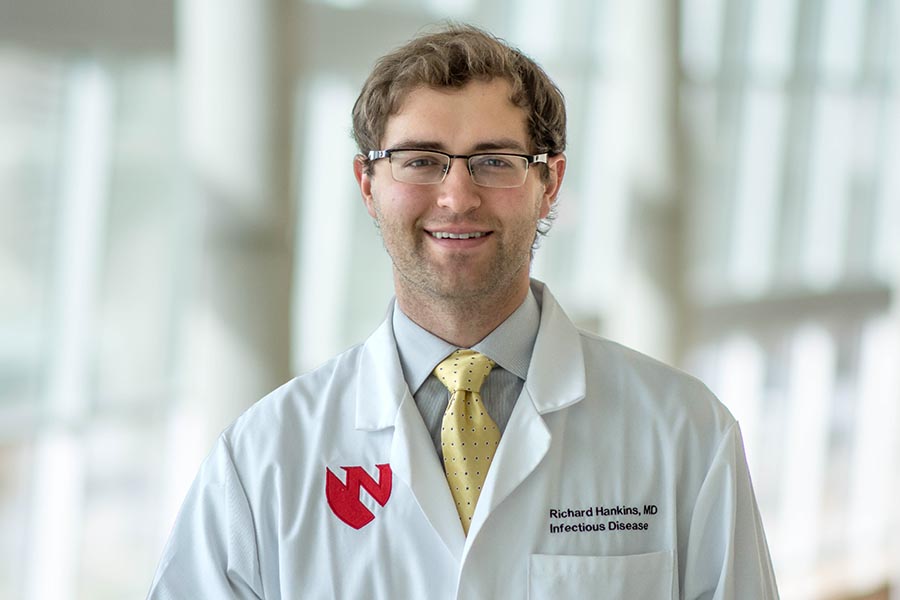
Dr. Richard Hankins will be joining the Nebraska Biocontainment Unit (NBU) Leadership team as Associate Medical Director of the NBU.  Dr. Hankins is an Assistant Professor at UNMC, and an Associate Medical Director of Antimicrobial Stewardship and Infection Control at Nebraska Medicine. Dr. Hankins has been a member NBU team for several years. He will be working closely with Dr. Hewlett to continue the success of the NBU.

Congratulations to Drs. Bares, Cortes-Penfield, and Hankins on their new leadership roles, and huge thank you to Drs. Fadul and Hewlett on their outstanding leadership and mentorship of junior faculty to step into their roles.
 

Mid-Year Accolades! – We are so PROUD of our people!

Announcement image. Top panel with white background reads UNMC Division of Infectious Diseases in green font. Below that reads Breakthroughs for Life logo in black font. Below this is green background, with mid-year accolades, we are proud of our people, written in white text. bottom right corner is a red UNMC shield logo.

Congratulations to members of our division for their achievements and recognitions so far this year! These are just a few of the outstanding accomplishments of our division.

Kelly Cawcutt MD, Rick Starlin MD, and Nico Cortes-Penfield MD, are part of the inaugural graduating class of the inaugural Nebraska Medicine Physician Leadership Academy. Sara Bares MD, will join the Physician Leadership Academy this academic year.

Jenn Davis, MD was one of the top-performing reviewers for Clinical Infectious Diseases this quarter.  She completed multiple reviews that the editors rated as the highest quality and received a notice of appreciation for this achievement.

Kelly Cawcutt, MD was elected to Fellowship of the Society for Healthcare Epidemiology of America (SHEA).

Jasmine R. Marcelin, MD was invited as an international faculty member to deliver a career development workshop session as part of the Emory-Nigeria Research Training Program Workshop in Lagos, Nigeria

Angela Hewlett, MD was selected as chair of the inaugural IDSA Outbreak and Pandemic Preparedness Panel

Jonathan Ryder, MD presented a webinar to the Healthcare Association for New York State titled “Stewarding Skin and Soft Tissue Infections”

Andre Kalil, MD was the invited guest for the Critical Matters Podcast, in which he discussed his approach on the management of patients with pneumonia in the ICU.

James Lawler, MD led a Kenyan health delegation through a tour of the Training, Simulation and Quarantine Center, and the National Quarantine Unit.

Jasmine R. Marcelin, MD contributed to a brand-new chapter in the new edition of Mandell’s Principles and Practice of Infectious Diseases, focused on Communicating about infectious diseases with the public. This new addition to the textbook highlights the important role infectious disease physicians play in guiding communities through times of uncertainty and crisis. Drs. Mark Rupp, Nico Cortes-Penfield, Jonathan Ryder, Trevor Van Schooneveld and Paul Fey, also authored recurring chapters in this edition of Mandell’s.

Angela Hewlett, MD and Nico Cortes-Penfield, MD were invited delegates at the International Consensus Meeting on Periprosthetic Joint Infection (ICM) in Istanbul, Turkey

Scott Bergman, PharmD received the Commitments to Pharmacy Excellence award from the West Virginia University Hospitals residency program and gave the keynote address at their graduation banquet

Richard Hankins, MD received the Dr. James A. Cottone Research Award from the Association for Dental Safety

Nico Cortes-Penfield, MD was promoted to Associate Professor on July 1

Andrea Zimmer, MD was inducted into Alpha Omega Alpha Medical Honors Society

Trevor Van Schooneveld, MD was an invited speaker in 2 sessions at the ASM Microbe conference in June

Jenn Davis, MD was the faculty lead on an e module titled, “Sexually Transmitted Infections: A Guide to Treatment” for the E learning awards program cohort this year. Dr. Jonathan RyderShawna Sunagawa, and Dr. Richard Hankins also participated from our department. This e-module was the top vote recipient!

Rick Starlin, MD leads the Bronchiectasis and NTM clinics, recently designated as a Bronchiectasis and NTM Care Center Network by the Bronchiectasis and NTM Association

Caroline Song joined as our new ID Fellowship Program Coordinator

Elizabeth Schnaubelt, MD was promoted to the rank of Colonel in the U.S. Air Force

David Warren, MD joined us as our new Division Chief in January

Mark Rupp, MD became the interim Chair of the Department of Internal Medicine in January


Strong Representation from UNMC Specialty Care Clinic at International HIV Conference

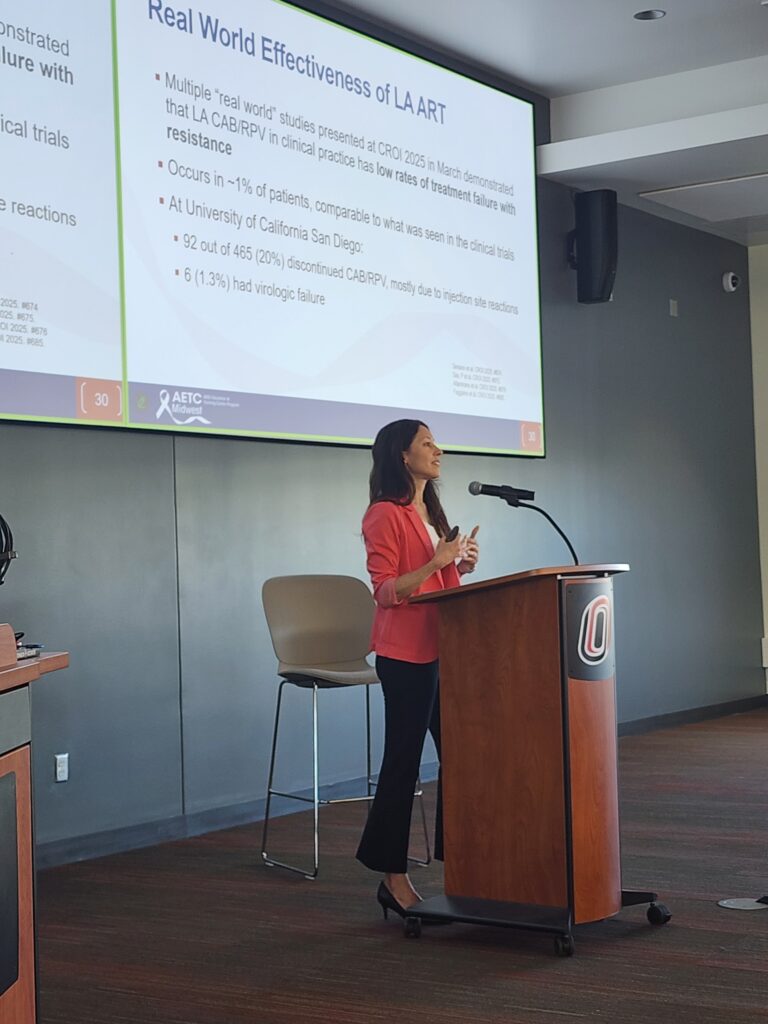
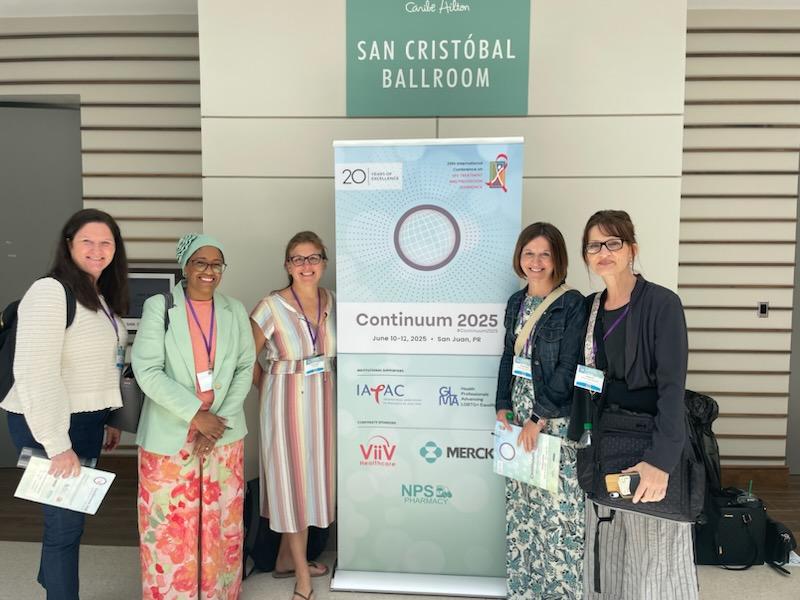
Several representatives of the UNMC/NM Specialty Care Center attended the 20th anniversary of the Continuum Conference (formerly Adherence Conference) in San Juan, Puerto Rico. This is an annual conference hosted by the International Association of Providers in AIDS Care. This year’s theme focused on Reframing HIV Care, with plenary sessions covering the HIV Care Continuum, long acting antiretroviral therapy and differentiated service models, HIV PrEP, quality of life measures in HIV care, implementation science and social determinants of health.

UNMC/NM attendees and speakers include (pictured below L-R):

Maureen Kubat, RN (et al): Long-Acting Injectable ART Preferences Among Midwestern People with HIV Living Remotely from Care Facilities

Dr. Nada Fadul: Building HIV Capacity During Conflict: Insights from the Sudan ECHO Program (oral abstract)

Nikki Regan, APRN (et al): If You Don’t Ask, Will they Tell? Screening for Depression in a Midwest HIV Clinic (oral abstract)

Jen O’Neill, RN (et al): Long-Acting Injectable ART Preferences Among Midwestern People with HIV Living Remotely from Care Facilities

Renae Furl (et al): Increasing HIV Education Access for Midwestern Primary Care Providers: A Digital Approach

Content provided by Nikki Regan, APRN


World Bronchiectasis Day – Raising Awareness, Inspiring Action

Every year on July 1st, the global community comes together to recognize World Bronchiectasis Day—a vital initiative aimed at raising awareness, sharing knowledge, and advocating for better care for those affected by bronchiectasis.

What is Bronchiectasis?

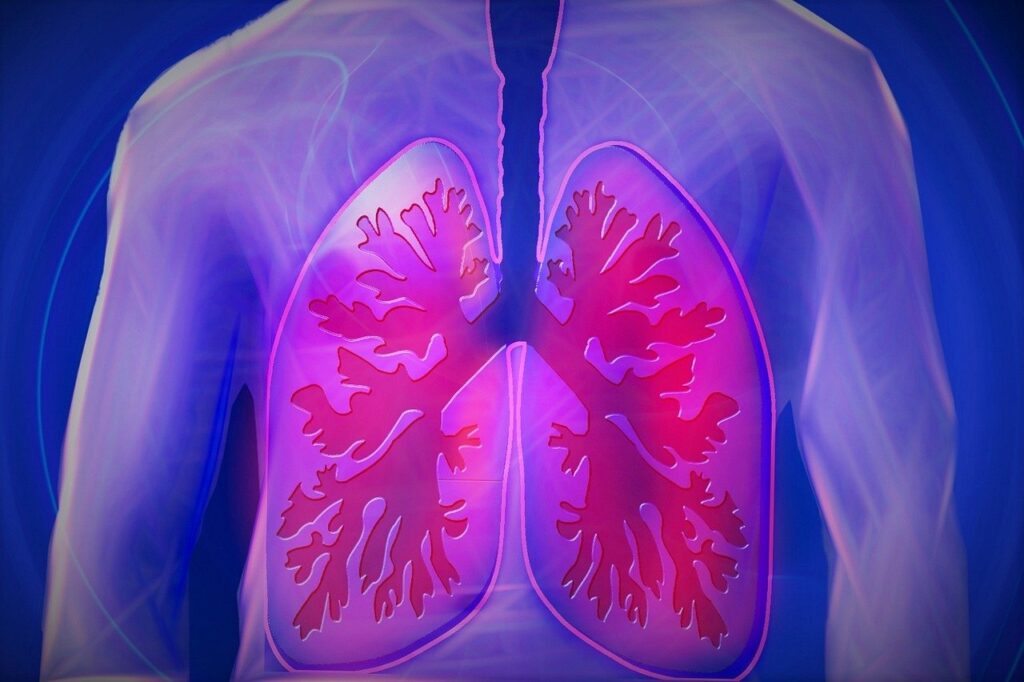
overlaying a dark blue background, is a graphic of a human chest, and overlaying this are a pair of lungs with abnormally widened airways

Bronchiectasis is a chronic lung condition where the airways become abnormally widened, leading to a build-up of mucus and recurring lung infections. It can significantly impact a person’s quality of life, causing persistent coughing, breathlessness, and fatigue. Despite its seriousness, bronchiectasis remains underdiagnosed and often misunderstood.

How You Can Get Involved

  • Spread the Word: Share information on social media using the hashtag #WorldBronchiectasisDay.
  • Visit the Official Website: www.WorldBronchiectasisDay.org for educational materials, patient stories, and event listings.
  • Support Patients and Families: Help connect patients with specialized care by referring them to Nebraska Medicine’s newly accredited Bronchiectasis and NTM clinics, designed to provide comprehensive, multidisciplinary, expert-led evaluation and treatment.
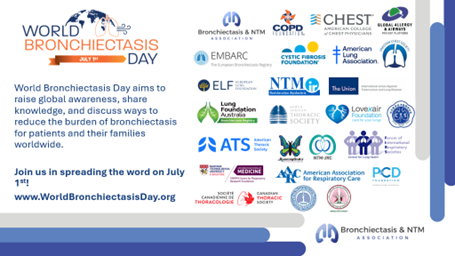
Slide with white background. on the right hand are multiple logos of affiliated organizations. On the top left is a logo depicting world bronchiectasis day. On the left center are the words "World Bronchiectasis Day aims to raise global awareness, share knowledge, and discuss ways to reduce the burden of bronchiectasis for patients and their families worldwide."  Below this is written "Join us in spreading the word on July 1! wwww.worldbronchiectasisday.org"

Content provided with review by: Rick Starlin, MD


UNMC Specialty Care Center Co-Hosts Nebraska HIV Prevention and Care Update Conference 

The Nebraska HIV Prevention and Care Update on May 8, 2025, brought together healthcare professionals, public health leaders, and community advocates to share the latest developments in HIV care, prevention, and support services. The event emphasized innovation, community-based strategies, and integrated care models. The 2025 HIV Update conference was hosted in person at Mammel Hall at UNO, as well as virtually, and had over 150 attendees in total.  

Session Highlights 

Co-chairs Andy Dillehay, Gaye Gwion, and Nikki Regan offered opening remarks to set the tone for a collaborative and forward-thinking day focused on improving HIV outcomes across Nebraska. Logan Reynolds (NEDHHS Ryan White Program Coordinator) and Daemon Donigan (AIDS United Specialist) provided updates on the Ryan White HIV/AIDS Program, HOPWA, and capacity-building efforts. They highlighted funding priorities, service delivery improvements, and strategies to enhance provider training and infrastructure. 

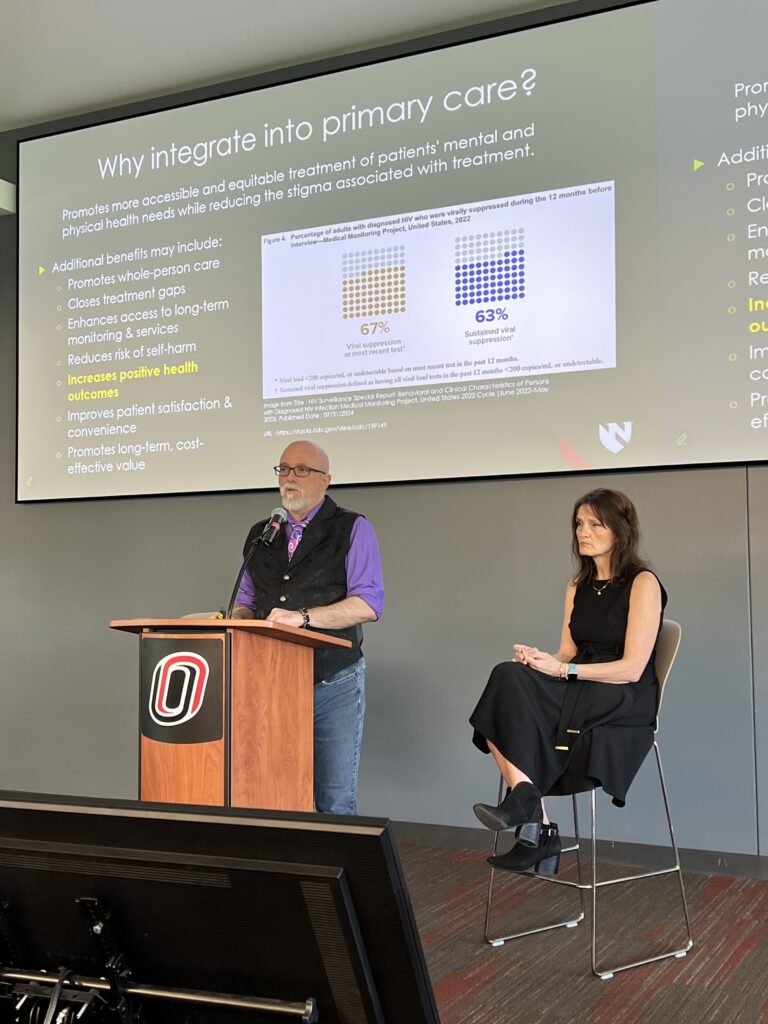
Dr. Sara Bares (UNMC Associate Professor) discussed the evolving landscape of HIV treatment, emphasizing long-acting injectable therapy options. Dr. Jenn Davis (UNMC Assistant Professor) followed with updates on integrating HIV care into primary care settings, stressing the importance of patient-centered approaches to address lifelong co-morbidity risks for patients living longer with HIV.

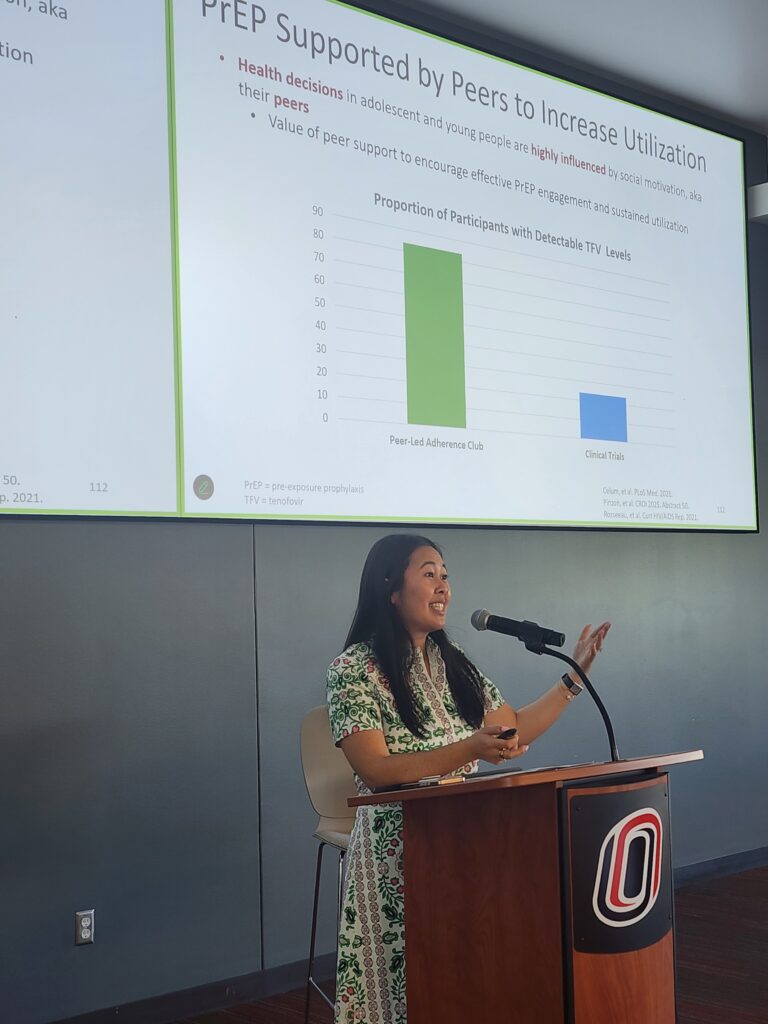
Dr. Josh Havens (HIV program PharmD) introduced next-generation PrEP options, including long-acting injectables and new delivery methods. Dr. Shawna Sunagawa (HIV program PharmD) focused on community-based interventions, highlighting culturally responsive strategies to expand PrEP access, and citing a current outreach effort at One World Community Health Center. 

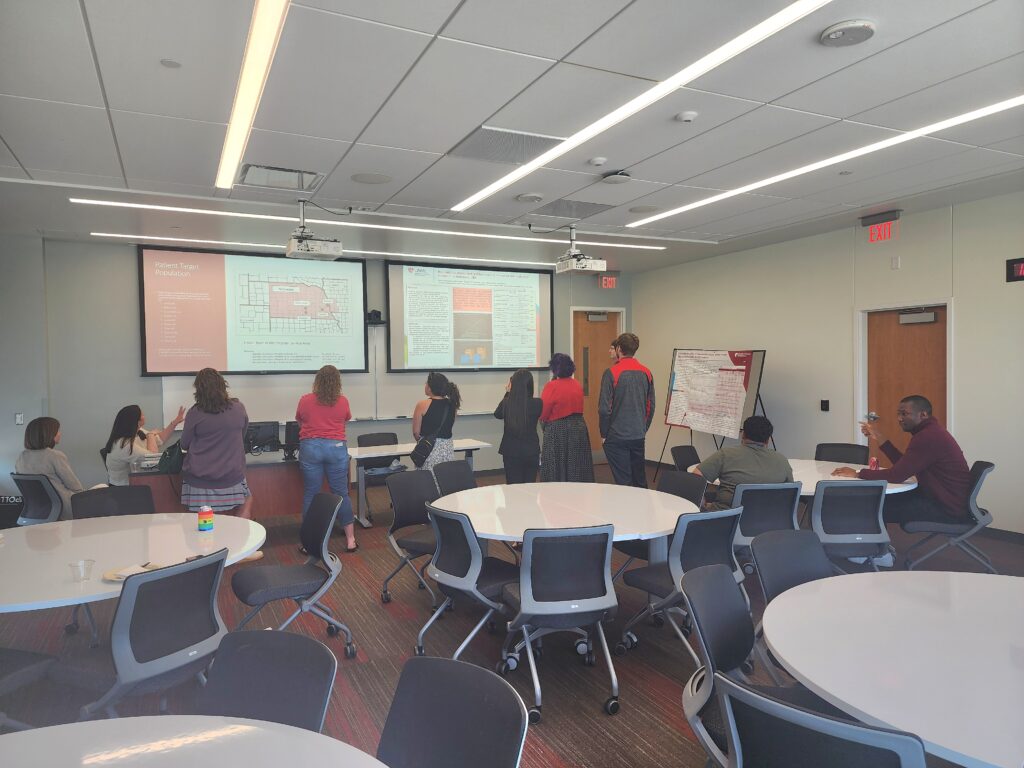
The lunch hour was a chance for in-person attendees to network with others, including several SCC team members who hosted the inaugural HIV Update Poster Hall.  Jen O’Neill and Mo Kubat (SCC Cabenuva nurses/program coordinators) shared a poster highlighting current impacts of the IM-CAPABLE study, to expand long-acting injectable antiretroviral therapy to central Nebraska. Emmanuel Essam-Nkodo (SCC Research Coordinator) also shared 2 posters which have been viewed at international conferences, showcasing the impact of Medicaid expansion on HIV outcomes in Nebraska as well as access to COVID-19 treatments for people with HIV in Nebraska. 

Melissa Neuenfeldt (RN, COO) and Dr. Dalton Nelsen (UNMC, HEAL CEO) presented HEAL Omaha’s street medicine model, which delivers care directly to unhoused and underserved individuals. Their work demonstrates how mobile outreach can bridge gaps in HIV prevention and treatment. 

presentation screen with dark background and white text, in the center is a blurry image with white background and red and blue dots depicting program participation. In the foreground are two presenters dressed professionally, one standing at a brown podium and the other sitting in a chair to his left.

Lance Burwell (SCC Behavioral Therapist) and Renae Furl (SCC Clinical Study Coordinator) explored the intersection of behavioral health and HIV management, advocating for trauma-informed practices to support vulnerable populations and improve engagement in care.  They also described the recent successes and lessons learned through the innovative i2TEC project, which supports patients with telehealth based coaching sessions. 

Alyssa Maxwell (CenterPointe Program Director) addressed the impact of substance use on HIV transmission and care. She emphasized integrated health teams and supportive services as key to reducing stigma and improving outcomes. 

Nikki Regan, Gaye Gwion, and Daemon Donigan concluded the day by reinforcing the importance of collaboration, innovation, and community engagement in the fight against HIV in Nebraska. We thank all our community partners and attendees.

20 people standing on stairs dressed professionally, smiling. in the background outside is a bright day with a blue sky.
Conference Planning Committee

If you are interested in attending future HIV Update conferences, or have suggestions for important topics, please contact Nikki Regan at nregan@nebraskamed.com.  


Excitement Builds for SHEA Spring 2025: Meet the Presenters from Our Division

The SHEA Spring 2025 meeting promises to be a vibrant gathering of thought leaders in healthcare epidemiology and infection prevention. Held from April 26-30, 2025, in beautiful Championsgate, FL, the event will feature groundbreaking research, innovative practices, and insightful discussions. We’re thrilled to highlight the brilliant presenters from our division, each contributing to the advancement of healthcare practices:

Posters:

  • Division Authors: Kate Tyner*, Jody Scebold, M. Salman Ashraf, Dan German, Rebecca Martinez, Josette McConville, Sarah Stream, Mounica Soma, Juan Teran Plascencia (Nebraska ICAP)
    Presentation: Infection Prevention Program Infrastructure and Implementation of Best Practice Recommendations in Outpatient Healthcare Facilities
    Times:
    • Poster session: Wednesday, April 30, 12:00–1:30 PM
    • Featured in a Science Salon: Monday, April 28, 1:00–1:30 PM (presented by a SHEA SME)
  • Division Authors: Evangeline (Gigi) Green*, Jonathan Ryder, and Jasmine R. Marcelin
    Presentation: Turning Crisis into Opportunity: Blood Culture Stewardship and the National Impact of a Blood Culture Shortage on Clinical Care
    Time: Poster Session: Tuesday, April 29, 12:00–1:30 PM
  • Division Authors: Miranda Neumann*, Monica Krause, Kelly Goetschkes, Lauren Musil, Mark E. Rupp, Kelly A. Cawcutt
    Presentation: Knobmanship – A Means to Avoid False Positive Burden of VAE
    Time: Poster Session: Wednesday, April 30, 12:00–1:30 PM
  • Division Authors: Richard Hankins*, Miranda Neumann, Elizabeth Grashorn, Kelly Cawcutt
    Presentation: Evaluation of Healthcare-Associated Infections and Daily Bathing Compliance on BMT Unit after Introduction of 2% CHG Wipes
    Time: Poster Session: Monday April 28th from 12:00-1:30pm
  • Division Authors: Jenna Preusker, Juan Teran Placencia, Trevor Van Schooneveld, Scott Bergman, Danny Schroeder, M. Salman Ashraf
    Presentation: Analyzing Antibiotic Usage Rates Reported to NHSN by Nebraska Hospitals: Insights by Hospital Size and Rurality
    Time: Poster Session: Monday April 28th from 12:00-1:30pm
  • Division Authors: Mark Rupp
    Presentation: Multi-Center, Randomized Study To Evaluate The Efficacy And Safety of Mino-Lok for the management of CLABSI In Hemodialysis Patients
    Time: Poster Session: Monday April 28th from 12:00-1:30pm

*Presenting Author

Oral Abstracts

Division Presenters: Jonathan Ryder*, Trevor Van Schooneveld, and Kelly Cawcutt
Presentation: Are SEP-1 and Blood Culture Stewardship at Odds? Retrospective Review of SEP-1 Failures Pre- and During Blood Culture Shortage
Time: Wednesday, April 30, 2025, 8:30–9:30 AM

*Presenting Author

Invited Podium Presentations

Division Speaker: Angela Hewlett
Presentation: Approach to Novel Viral Pathogens with Pandemic Potential
Time: Monday, April 28, 2025, 11:00–11:30 AM

Division Speaker: Jasmine R Marcelin
Presentation: Strategic Stewardship: Essential Skills for Effective Leadership
Time: Wednesday, April 30th, 2025, from 1:30 PM to 2:30 PM.

Division Speaker: M. Salman Ashraf
Presentation: Context: IPC in LTC- where would decolonization fit
Time: Wednesday, April 30th, 2025, from 11:33AM to 11:48AM

Panel Speakers

Division Speaker: M. Salman Ashraf
Panel: Infection Prevention in Post-Acute Long Term Care Facilities
Time: Tuesday, April 29th, 2025, from 10:23AM to 10:34AM

These exceptional presentations showcase the expertise and dedication of our division to pushing the boundaries of infection prevention and clinical care. Be sure to mark your calendar for these sessions—you won’t want to miss the opportunity to learn from these innovative minds!

Let the countdown to SHEA Spring 2025 begin!


Nebraska ID Society Trainee Abstract Competition

The Nebraska Infectious Diseases Society is looking forward to hosting the 4th annual meeting and trainee abstract competition on Friday August 15, 2025, at the World-Famous Omaha’s Henry Doorly Zoo!

Last year more than 30 students, residents, and fellows presented their case reports and research.

Are you a trainee in Nebraska with an interest in Infectious Diseases? This is a perfect opportunity to submit a new clinical case or scholarly project, or present work submitted to a national conference. You will also get some feedback about presentation before time to present on the national stage!

The Nebraska ID Society Education committee welcomes abstract submissions from medical and pharmacy students, residents, and fellows enrolled in Nebraska training programs. Submit your abstract here.

The top two abstracts will be selected for oral presentation, and the best poster presentations in the research and clinical vignette categories will receive special recognition. The presenting author will receive complimentary registration to the meeting. The submission link has information about abstract guidelines and requirements.

Click this link to submit your abstract. More information below.

Timeline
  • Abstracts must be submitted by midnight on May 31st, 2025.
  • Applicants will be notified of acceptance by June 30th, 2025. 
Abstract Submission Guidelines
  • Submitter must be a currently enrolled trainee in a Nebraska health professions training program
  • Include abstract title and list all authors.
  • Should not contain tables, charts, or pictures.
  • No more than 3000 characters (including spaces; title, author, and affiliations not included in character count).
  • Include supervising mentor as the senior author.
  • Submit abstracts by May 31, 2025. Late submissions will NOT be accepted.
  • Posters that have been presented at other conferences within the past year or those who plan to present at future conferences in the next year may be submitted
  • Posters must be educational and must not promote any commercial product or service. 
  • Abstracts submitted to a prior NIDS meeting or representing work published prior to submission will NOT be accepted.
Poster Guidelines
  • NIDS will supply boards (36″ x 48″) to hang posters.  Posters should be no larger than 36″ x 48″ to fit on the board/easel. 
  • The poster can be horizontal or vertical.
  • Presenters will receive additional information about poster set up after abstract disposition. 
  • Presenters will have 5 minutes to concisely present their posters for judging.
Abstract Review Guidelines
  • RESEARCH
    • Background & Research Question/Aims: Background provides appropriate perspective/context for the subject. Research question(s), aims or hypotheses are clearly stated
    • Methods: Research design/methods/modeling is appropriate and transparent; Data sources and/or sampling procedures are clear and appropriate
    • Results: Factual information is kept separate from interpretations or implications
    • Scientific Merit and Relevance: Has a high impact on the institution and ability for generalization
    • Originality: Innovative and presented in an unbiased manner
  • VIGNETTE
    • Background:  A brief general description of the medical condition
    • Case History:  Briefly summarized patient’s presentation, workup, diagnosis, and treatment.  Discussed key points of the case presented in a clear, organized, and easy to read fashion.
    • Originality: Innovative and presented in an unbiased manner
    • Clinical Impact/Teaching Value: How useful is the case as a teaching tool? How significant or relevant were the conclusions in increasing understanding of a disease process, or in improving the diagnosis or treatment of a disease?
    • Case Novelty: Does the case represent a rare condition or rare presentation of a common condition?

Submit your abstracts today!

Submit your abstract today!


Nebraska ID Society to Hold 4th Annual Meeting

The Nebraska Infectious Diseases Society is excited to announce the date of this year’s annual meeting, which promises to be a local destination event! Save the date and join us for a day filled with insightful discussions, networking opportunities, and the latest updates in the field of infectious diseases. This in-person event will take place at the World-Famous Omaha’s Henry Doorly Zoo on Friday, August 15th, 2025, providing a comfortable and professional setting for attendees to connect and learn from each other, and option for enjoying the zoo after the meeting.

Here’s what you can expect at this year’s meeting:

  • Riveting presentations focused on one-health, Nebraska health, and hot topics
  • Infectious diseases experts across the spectrum of our specialty: infection prevention/hospital epidemiology, antimicrobial stewardship, pediatric infections, public health, microbiology/pathology/laboratory medicine, and more!
  • Outstanding trainee oral and poster presentations
  • Opportunities to network with exhibitors and learn about what’s new in industry
  • Annual Business Meeting (Members only)
  • Delicious food and snacks throughout the day

Save the date August 15, 2025, and stay tuned for more information about registration information!

For trainees interested in participating in the abstract competition, learn more and submit your abstract here!


Research Digest – Central Venous Catheter Infections

Research Digest is a periodic installment that recognizes the world-class clinical research performed right here at UNMC ID. Today, we review two recent articles highlighting prevention and identification of central venous catheter contamination or infection. As always, check out the linked full articles for more details.


In vitro assessment of effect of initial specimen diversion device on detection of central venous catheter contamination or colonization. Infection Control & Hospital Epidemiology.

This study evaluated the effectiveness of an initial specimen diversion device (ISDD) in reducing contamination of central venous catheter (CVC) blood cultures. Using an in vitro model, researchers simulated CVC colonization and contamination and compared standard blood culture methods with ISDD. The ISDD detected 100% of colonized CVCs while reducing false-positive cultures from 36% to 16%.

Colonization models showed that while both methods detected bacteria, ISDD cultures had significantly lower bacterial loads and longer time-to-positivity (TTP), indicating exclusion of the heavily colonized initial blood sample. The contamination model demonstrated a 56% reduction in contamination rates with ISDD use, though statistical significance was not reached (p = 0.196).

Findings suggest that ISDD use may enhance the specificity of CVC blood cultures by reducing contamination while maintaining sensitivity. Given the clinical burden of blood culture contamination—leading to unnecessary antibiotics, catheter removals, and prolonged hospital stays—the study supports further clinical trials to assess ISDD utility in obtaining blood cultures via CVCs. Read the full article here.


Utilizing whole genome sequencing to characterize central line-associated bloodstream infections due to Staphylococcus epidermidis. Infection Control & Hospital Epidemiology, 2025.

This study applied whole genome sequencing (WGS) to differentiate true catheter-related bloodstream infections (CRBSIs) from blood culture contamination in 14 cases of Staphylococcus epidermidis central line-associated bloodstream infections (CLABSIs). WGS analysis showed disparate strains in 42.9% of cases, suggesting contamination, while clinical review suggested contamination in 57.1% of cases.

Researchers analyzed 42 S. epidermidis isolates from peripheral blood and central venous catheters (CVCs) from 14 patients at a 680-bed academic hospital who were classified as having a CLABSI per CDC criteria. Clinical review categorized cases as likely CRBSI, likely contamination, or ambiguous. WGS determined strain relatedness to definitively classify strains as identical or disparate. Identical strains in peripheral and CVC cultures were suggestive of true infection, whereas disparate strains indicated contamination. In 69.2% of cases, WGS and clinical assessments aligned; however, in four cases, clinical assessment favored contamination while WGS suggested true infection. 

The findings highlight the limitations of traditional CLABSI definitions, which may overdiagnose infections due to blood culture contamination. WGS can improve diagnostic precision by distinguishing true infections from contaminants, potentially refining CLABSI surveillance metrics and antibiotic stewardship. Further studies are needed to integrate WGS into routine clinical decision-making. Read the full article here.

*We are trying a new approach using AI to help summarize articles. These publications were summarized by ChatGPT (https://chatgpt.com/) and approved by the authors. There is always room for improvement. Let us know if we got it right, or if we got it wrong!*


Research Digest – HIV and STI updates

Research Digest is a periodic installment that recognizes the world-class clinical research performed right here at UNMC ID. Today, we review two recent articles highlighting STI post-exposure prophylaxis and HIV treatment in patients with substance use disorders. As always, check out the linked full articles for more details.


Utilization of Doxycycline Post-Exposure Prophylaxis at a Midwestern United States HIV/PrEP Clinic. Open Forum Infectious Diseases, January 30, 2025 (Editor’s Choice)

This study assessed doxycycline post-exposure prophylaxis (doxy PEP) prescribing and adherence to CDC guidelines at the University of Nebraska Medical Center’s Specialty Care Center (UNMC SCC). Doxy PEP reduces sexually transmitted infections (STIs), including Neisseria gonorrhoeae, Chlamydia trachomatis, and Treponema pallidum.

Researchers retrospectively analyzed prescriptions from March 2023 to February 2024 for adherence to recommended follow-ups and STI screenings. Among 90 patients (97.8% male, average age 38.6), 70% received doxy PEP per protocol, while 30% had non-adherent prescriptions, primarily due to missed STI screenings (89%), particularly for syphilis.

The median prescription was five doses, with a median 32% coverage of days. While 13% of patients were diagnosed with an STI during doxy PEP use, syphilis incidence was significantly lower compared to the clinic’s background rate (1.8% vs. 6.9%, p = 0.01). Missed screenings, possibly due to cost barriers, pose a challenge to doxy PEP’s effectiveness and may contribute to antimicrobial resistance risks.

The study highlights the need for affordable STI screening, routine monitoring, and individualized prescribing to optimize doxy PEP’s impact on STI prevention. Read the full article here.


Week 96 Results of Bictegravir/Emtricitabine/Tenofovir Alafenamide for HIV Treatment in People With Substance Use Disorders. Open Forum Infectious Diseases, December 20, 2024

The BASE study evaluated the long-term efficacy and adherence of bictegravir/emtricitabine/tenofovir alafenamide (B/F/TAF) in people with HIV and substance use disorders (PWH/SUD). At 96 weeks, viral suppression (HIV RNA <50 copies/mL) declined to 44% (intent-to-treat), with adherence decreasing by 18% compared to the first 48 weeks. Despite lower adherence, no treatment-emergent resistance was observed, supporting B/F/TAF’s high barrier to resistance. Retention in care remained stable at 83.7%, but substance use, particularly methamphetamines, persisted in 83% of participants.

Higher adherence (≥4 doses/week) significantly increased the likelihood of viral suppression (84% vs. 16%, p <0.01). Participants who lost suppression at week 96 had a 55% decline in adherence. Adverse events were common (53.5%), though none were attributed to B/F/TAF. Syphilis was the most frequently diagnosed infection (11.6%), and neuropsychiatric events occurred in 7%. Despite adherence challenges, B/F/TAF remained effective and well tolerated in this high-risk population.

The findings underscore the need for adherence support, substance use treatment, and social interventions to optimize HIV outcomes in PWH/SUD. Read the full article here.

*We are trying a new approach using AI to help summarize articles. These publications were summarized by ChatGPT (https://chatgpt.com/) and approved by the authors. There is always room for improvement. Let us know if we got it right, or if we got it wrong!*