Written by UNMC Office of Academic Affairs and Derek Sullivan
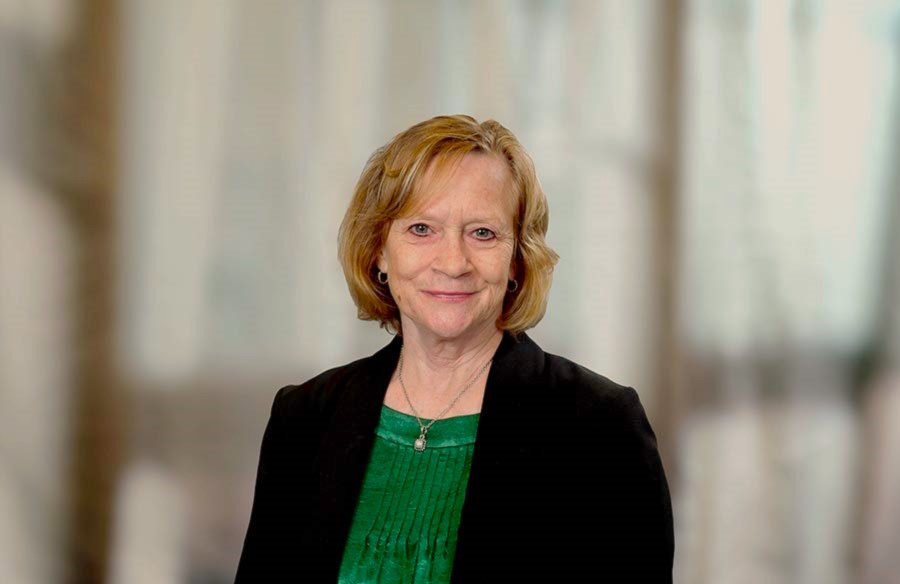
Terri Mathews, PhD, is an associate professor in the College of Nursing and the College of Medicine.
Dr. Mathews received the Inspirational Mentor of Educators Award at the Impact in Education Awards on March 6. The award honors an individual who has provided exceptional mentorship to junior faculty or trainees in their development as health professions educators.
Mathews is an associate professor in the College of Medicine and the College of Nursing. She joined UNMC in 2006. She has trained students across campus over the past two decades. She is a Pediatric Nurse Practitioner, Psychiatric Mental Health Nurse Practitioner, and a Licensed Psychologist. Dr. Mathews joined the faculty at the University of Nebraska Medical Center College of Nursing in 2008. Dr. Mathews clinical specialty is child and adolescent psychiatric mental health nursing.
Dr. Mathews discusses her career in behavioral healthcare and winning the prestigious Inspirational Mentor of Educators Award.
You’re the winner of the Inspirational Mentor of Educators Award. How have mentors inspired you?
I have been fortunate to have numerous exceptional mentors throughout my education and professional career as both a nurse and a psychologist. The mentors who inspired me most were those who demonstrated a genuine commitment to their mentees’ growth and development. Beyond intellectual excellence, these individuals were humble, diligent, respectful, and fair, and they listened attentively to those they guided. They consistently modeled the values they taught — demonstrating integrity, professionalism and compassion in both their personal and professional lives. Their ability to “walk the talk” established them as consummate role models and profoundly shaped my own approach to mentorship and education.
Describe your proudest moment as an educator.
My proudest moment as an educator was when a struggling student graduated from the UNMC College of Nursing and passed their certification exam on the first attempt. The students struggled both academically and professionally in the first two years of the Psychiatric Mental Health Nurse Practitioner program. During those years, this student required extensive support, remediation and honest feedback. Initially, this level of accountability was not well received. However, through persistence, structure, and encouragement, the student progressed and achieved both graduation and certification. That moment was especially meaningful when I was the first person the student contacted after learning of the exam results — an affirmation that the challenging but supportive mentoring relationship had made a lasting impact.
What advice would you give other faculty members who want to make an impact on education?
Faculty who wish to make a meaningful impact must recognize that each student is an individual with unique learning styles, backgrounds and life circumstances. While our students at UNMC are held to high academic and professional standards, many are also navigating complex personal responsibilities — such as parenting young children, caring for aging family members or managing their own health challenges. Maintaining rigorous expectations while providing respectful, individualized support is essential. Effective education is grounded in genuine care and empathy. Ultimately, the focus must remain on the student’s success.
What drove you to work in psychiatry?
I would say that it evolved over time because for the majority of my career I worked in clinical practice. I was a nurse practitioner and worked as a clinical nurse specialist in pediatric cardiac surgery. I worked at a children’s hospital in Kansas City, did emergency room work and orthopedics, and then did primary care in a small clinic in northern Minnesota for a while. It was taking care of adolescent females who had a lot of behavioral health problems that prompted me to go back to get my PhD. And my PhD is not in nursing, it’s in developmental and child psychology.
What traits make a good psychiatric nurse?
Their communication skills are probably number one. Then, you look at their ability to be empathetic and non-judgmental. Those three keys are probably paramount in psychiatry. Another general quality that I see in nurses is their understanding that there is still a lot to learn. We don’t know it all, and we never will. We need to recognize we are just a small part of that individual’s life, and we have to understand the situation they’re in, look at their whole environment, and take everything into consideration. Honestly, we only know a small piece of what’s really going on with them. I’ve learned that good students recognize both that and the environmental variables that are so essential to how that person is functioning.