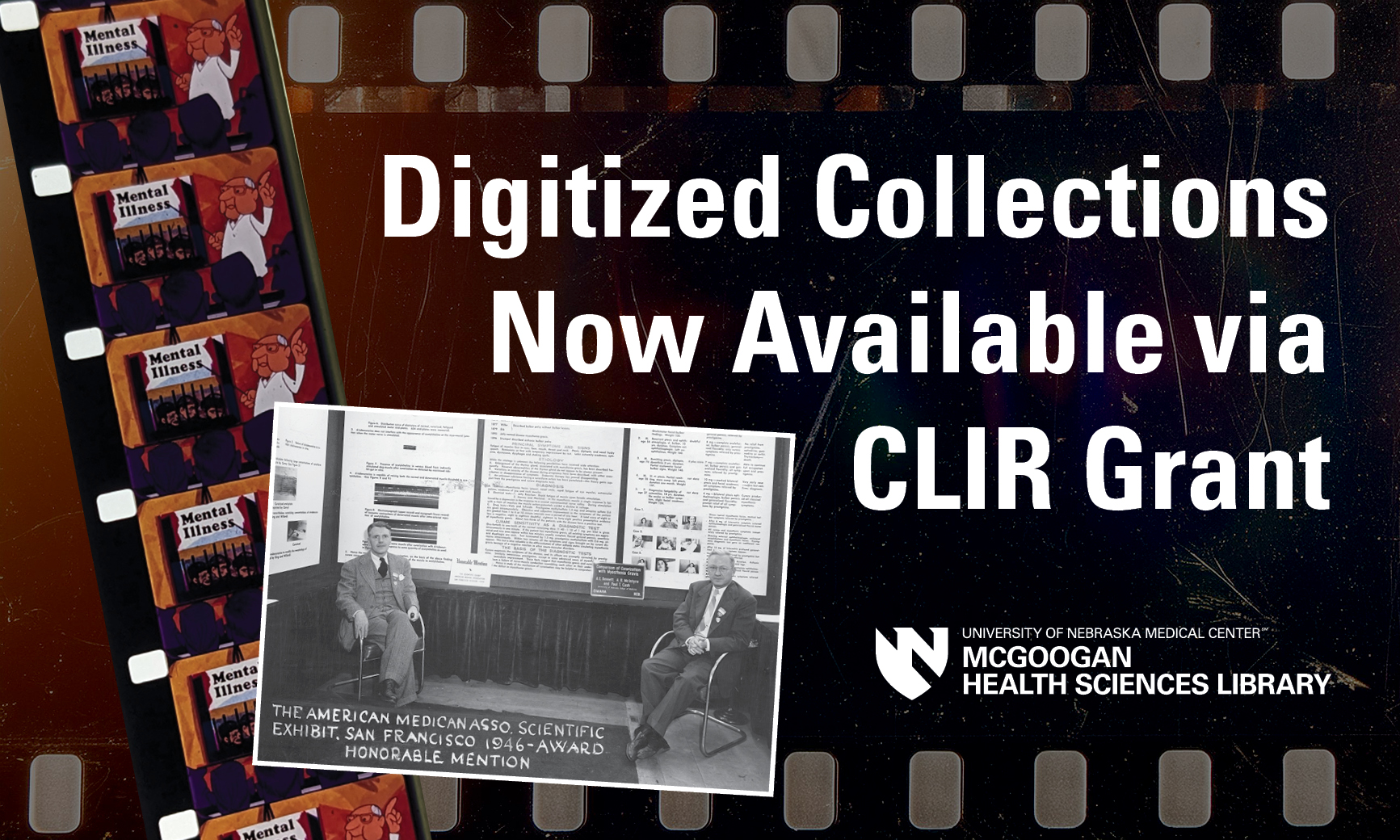
Furthering missions of preservation and especially access, McGoogan Library staff regularly digitizes materials within the library’s archives, ensuring touchpoints for generations.
Among their accomplishments, library staff recently digitized 65 historical medical films thanks to a Recordings at Risk grant from the Council on Library and Information Resources (CLIR). These films shed light on “mid-century psychiatry, medical education, and the use of film and media in healthcare training,” Digital Archivist Larissa Krayer wrote in a description.
Digitizing these films offers great potential value to researchers seeking to gauge how the healthcare field once understood and treated mental health.
An archivist’s approach
McGoogan archivists digitize everything from works on paper to works created with increasingly obsolete technologies such as 16mm film.
Digitized artifacts can then be used in research and teaching, displayed in online exhibits or on touch screens around campus.
Beyond materials like those covered by the CLIR grant, archivists often handle videos of groundbreakings and other moments now considered historically relevant to the UNMC community.
“If it’s on a screen, I’ve probably touched it,” Krayer said.
To complete this work, archivists familiarize themselves with technology old and new, Krayer said—and where it can be found. This might mean “scrounging” EBay, visiting the electronics section at a thrift store or absorbing knowledge from campus IT, she said.
Medical history on film
Among the films Krayer and her colleagues processed with the CLIR grant were decades-old films on electroconvulsive shock therapy which both included violent physical images and, at times, a clear intent on making the process safer and less traumatic.
Also present: public-service videos on mental health that featured animation reminiscent of “Schoolhouse Rock,” Krayer said.
McGoogan staff practiced trauma-informed librarianship along the way, dividing labor and taking necessary breaks from these often very moving images, Krayer added.
Archivists must keep a close eye on each audiovisual material they receive, she said, since they can’t know what might be useful or historically relevant otherwise. They also go into the process knowing they won’t be able to keep or use every object due to patient and privacy considerations.
The relevant footage archivists discover, “the pieces we find that are worth it are going to be very worth it,” Krayer said.
What a CLIR grant does
CLIR’s Recording at Risk grants are designed to preserve “time-based media of public value through digital reformatting,” according to its website.
This might include “magnetic audio and video tape, grooved discs, wax cylinders, wire recordings, and film (with or without sound),” the site adds.
In McGoogan’s case, archivists contributed context to historical understandings of mental health care, delivering a means to “unparalleled insights into past treatment methodologies, patient experiences, and societal perceptions of mental illness,” according to a description of the project on the CLIR website.
Volume and access were key principles driving the project.
“Snippets of some of these films have been made available by other institutions; however, by digitizing these reels, we can unlock their entire educational and historical significance, ensuring their preservation, wider dissemination, and research use,” the CLIR website notes in describing its connection with UNMC and McGoogan.
For those films which can’t be made publicly accessible, Krayer and McGoogan archivists also used the grant to create and attach metadata that’s thorough enough to help researchers gauge their level of interest.
Think of the library before you throw away
Digital doesn’t naturally equal better, with Krayer noting some physical media will last longer than some of its digital counterparts. But this work underlines and addresses the importance of access.
A “cliff” exists for some formats, at which point digital migration will become prohibitive or even impossible, Krayer said. McGoogan archivists continue looking for entry points, so important materials can be accessed no matter what time and technology have to say.
For Krayer, what is considered old often teaches new lessons—or at least reinforces timeless ones. Working on the CLIR grant project, Krayer was reminded that teaching tools and medical interventions change constantly, but education and evolution remain core to the work.
To archive is to learn constantly, Krayer said. She especially enjoys experimenting with and creating new workflows, protecting media materials, then handing them off to current and future archivists.
With this in mind, Krayer and her colleagues ask those in the UNMC community to think of McGoogan before they throw out any physical media. They are looking for tools and formats that their keepers have plugged in or know work to some degree. And right now, 1995-2005 represents a “sweet spot” for rapidly changing technology that can be utilized at McGoogan, Krayer said.
To inquire about donating media or any of the archivists’ work, email history@unmc.edu.