Note: This occasional series will take a closer look at pieces within McGoogan Library’s special collections, and will include everything from paintings to portraiture, medical illustrations to 3-D objects. This first installment covers the paintings “Mama” and “El Parto, Atitlan,” by brothers Mariano Gonzalez Chavajay and Matias Gonzalez Chavajay, respectively.
“Mama”
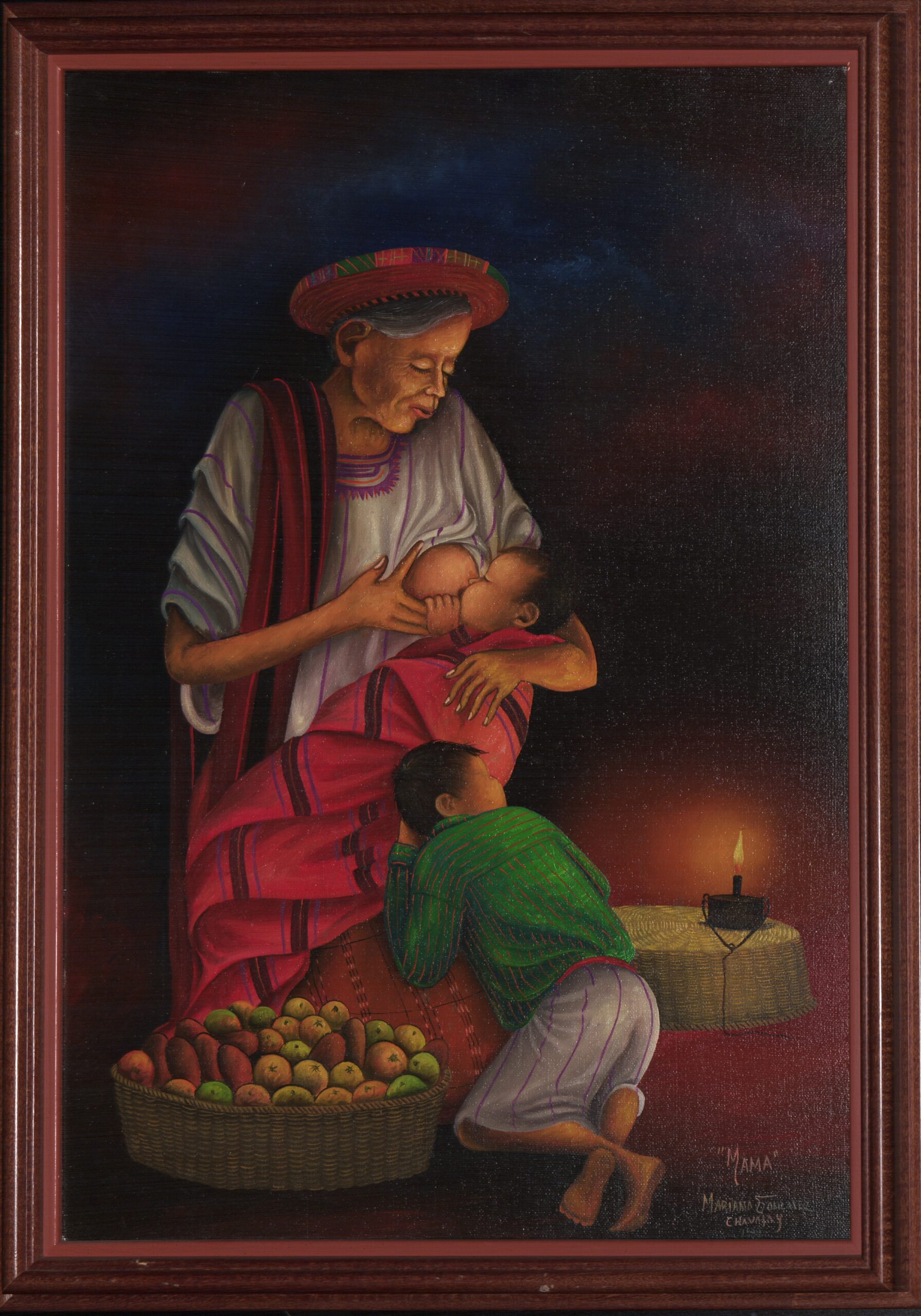
About the artist: Mariano Gonzalez Chavajay (1956- ) was born in Guatemala and belongs to the Tz’utuhil Maya people. Among the places his work is housed: the Smithsonian National Museum of the American Indian.
What you might see: A vivid description of the nursing ritual, “Mama” features an older-looking matriarch draped both in beautiful tunics and children. One nurses at her breast, while the other rests at her feet in a different show of dependence.
Also at her feet, a robust —almost to the point of overflowing—basket of apples, which perhaps provides sustenance for this nurturing task. A lone candle in the background lends the scene a reverent tone.
“El Parto, Atitlan”
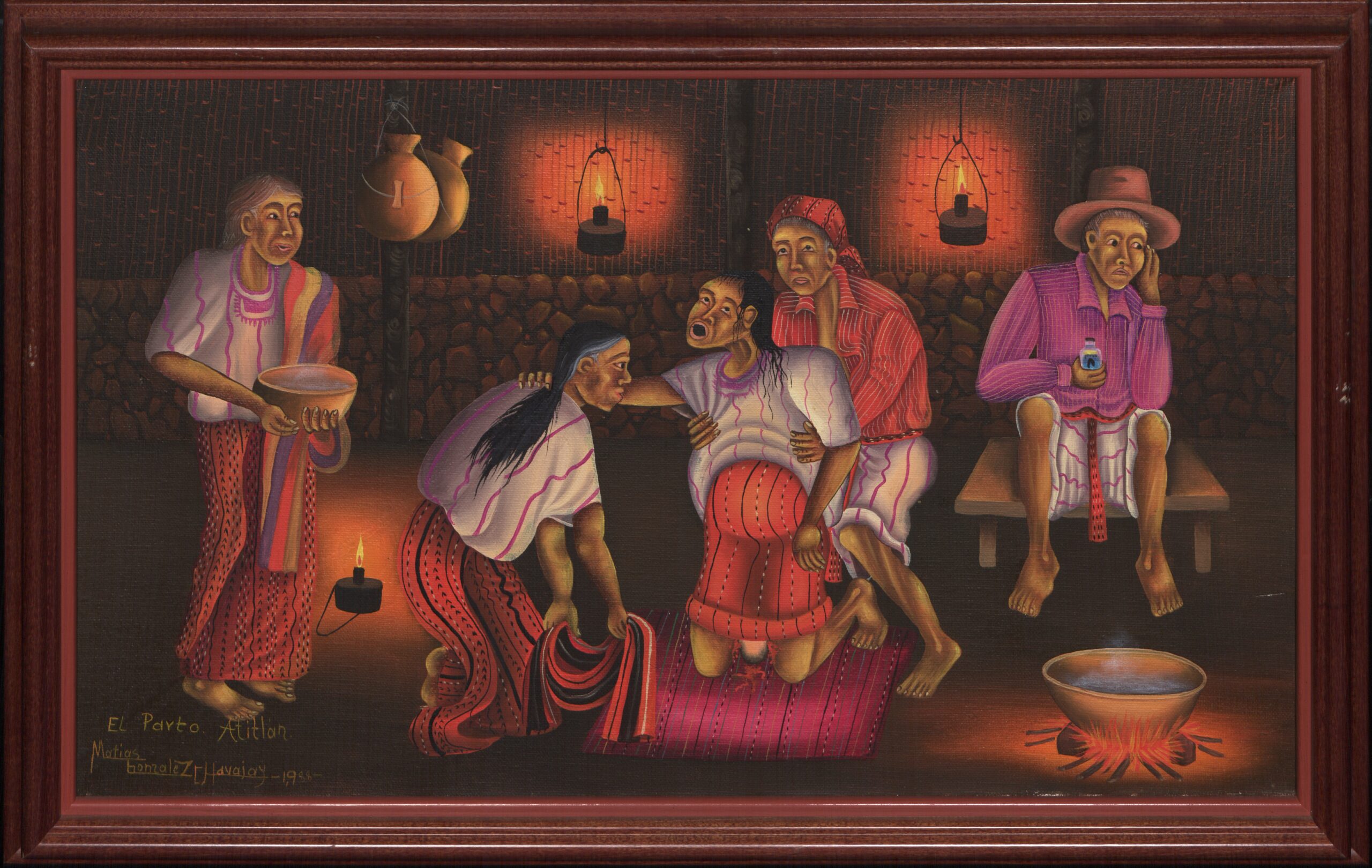
About the artist: Matias Gonzalez Chavajay (1959-) shares a country and heritage with his older brother. The brothers’ family tree includes their uncle, pioneering Tz’utuhil painter Rafael González y González.
What you might see: The true labor of childbirth is compellingly displayed as a trio of women surround the mother-to-be, each playing their part in midwifing. Candles play a prominent visual role here too, as does water—which is brought and heated to aid the transition into life.
A forlorn man (presumably the coming child’s father) sits off-center, existing somewhere on a sliding scale from patriarchal indifference to true concern.
How these pieces came to McGoogan Library: Through the collection of Leon S. McGoogan, MD, the late obstetrician, gynecologist and instructor for whom the library is named. Dr. McGoogan enjoyed two tenures as chair of the UNMC Department of Obstetrics and Gynecology, first from 1950-55 and again in 1961-62.
These particular works “highlight the cultural and ceremonial differences in motherhood while reinforcing the practical global commonality of pregnancy, postpartum, and mothering,” Special Collections Curator Darby Kurtz said. They reinforce the collection’s—and Dr. McGoogan’s—commitment to the medical humanities.
This collection also includes Dr. McGoogan’s faculty papers and rare books. A dedicated advocate for the library which now bears his name, Dr. McGoogan’s collection of books on midwifery, obstetrics and gynecology have set the library apart, contributing to its reputation as one of the nation’s preeminent institutions for rare books on these subjects.
How to see these pieces: These paintings live in the Reading Researcher Room on Level 8; to visit—or to learn more about Dr. McGoogan’s collection—email Special Collections and Archives at history@unmc.edu.